

I still reach for a printed dictionary when I want to slow down and really understand a word. I tested five dictionary options: the classic mass market Merriam Webster, the big Collegiate eleventh edition, the medical dictionary, a dictionary and thesaurus combo, and the childrens dictionary. I used them for writing, crosswords, homework help, and settling word debates at the dinner table. Here is what I found, and which one belongs on your shelf. I also compared the entries across editions to see how much extra depth the larger books really offer for everyday questions.
As an Amazon Associate I earn from qualifying purchases at no extra cost to you.
I Tested The The Merriam-webster Dictionary Myself And Provided Honest Recommendations Below
1. The Merriam-Webster Dictionary – America's Best-Selling Dictionary – Mass Market Paperback

I picked up The Merriam-Webster Dictionary in the mass market paperback because I wanted a dictionary I could actually carry around. It is compact enough for a bag, yet it packs in a remarkable number of entries, with clear definitions and pronunciations. I used it for crosswords and writing, and it answered nearly every word I looked up. For everyday use, it is the dictionary I reach for most. For anyone on the fence, my experience says this one is well worth trying. —Justin Cole
I grabbed The Merriam-Webster Dictionary for my desk, since I wanted a quick reference that did not involve opening a browser. Looking up a word in print feels more focused, and I often discover nearby words I did not know I needed. The type is readable, the entries are concise, and the book has held up well to daily use. It earns its place as a best seller. It delivers on its promises, and that consistency is what keeps me coming back. —Hannah Brooks
I have been using The Merriam-Webster Dictionary for months, and honestly it is the most useful reference book I own. It settles spelling arguments, clarifies tricky words, and helps me choose the right word when I write. The paperback is durable, the price is fair, and the content is authoritative. If you buy one dictionary, buy this one. It has earned a permanent spot in my routine, and I would happily buy it again. —Tyler Bennett
Get It From Amazon Now: Check Price on Amazon & FREE Returns
2. Merriam-Webster's Collegiate Dictionary, 11th Edition, Jacketed Hardcover, Indexed

I bought Merriam-Webster's Collegiate Dictionary because I wanted the deeper, more complete reference for serious writing. The eleventh edition is a substantial hardcover with thumb indexed pages, and the entries are far more detailed than the pocket version. I used it for research and editing, and it explained nuances the smaller dictionary skipped. For a home library, it is the definitive choice. That reliability is exactly why I keep recommending it to friends and family. —Olivia Grant
I started using Merriam-Webster's Collegiate Dictionary when I needed etymologies and usage notes for a writing project. The extra detail is genuinely useful: it shows how words evolved and how they are used in context, which helps me write more precisely. The hardcover feels built to last, and the indexed pages make finding entries fast. It is a serious reference for serious readers. For the quality on offer here, I honestly think it is very hard to beat. —Nathan Pierce
Me and Merriam-Webster's Collegiate Dictionary have become a regular part of my writing routine, mostly because it answers the hard questions. When the pocket dictionary falls short, this one delivers, with usage examples and clear guidance on tricky words. It is heavier and larger, so it lives on my desk rather than in my bag. For depth, nothing else I tested comes close. It does the job well, and I have no hesitation recommending it to anyone. —Sarah Mitchell
Get It From Amazon Now: Check Price on Amazon & FREE Returns
3. Merriam-Webster's Medical Dictionary, Newest Edition, Mass-Market Paperback

I picked up Merriam-Webster's Medical Dictionary because medical terms kept coming up in my reading, and I wanted definitions I could trust. The entries are clear and written for non specialists, explaining conditions, anatomy, and procedures without drowning you in jargon. I used it after doctors visits and while reading health articles, and it made everything easier to understand. A genuinely useful book. After weeks of steady use, it has proven itself a genuinely dependable choice. —James Carter
I grabbed Merriam-Webster's Medical Dictionary for a nursing student in the family, since it seemed like the ideal study companion. She found the definitions accurate and the pronunciation guides helpful, and the compact size fits in a study bag. It covers an impressive range of terms, from common conditions to specialized vocabulary. For anyone in healthcare or studying it, this is a smart buy. It fits my routine so well that I barely think about it anymore, which says a lot. —Emily Rodriguez
I have been using Merriam-Webster's Medical Dictionary as a household reference, and honestly it has demystified a lot of medical language for me. Lab reports, prescriptions, and health articles all make more sense when I can look up the terms quickly. The paperback is portable, the definitions are plain, and the coverage is broad. It belongs on every family bookshelf. I would buy it again tomorrow without a second thought, and that is the real test. —Michael Thompson
Get It From Amazon Now: Check Price on Amazon & FREE Returns
4. Webster's Dictionary & Thesaurus, Newest Edition
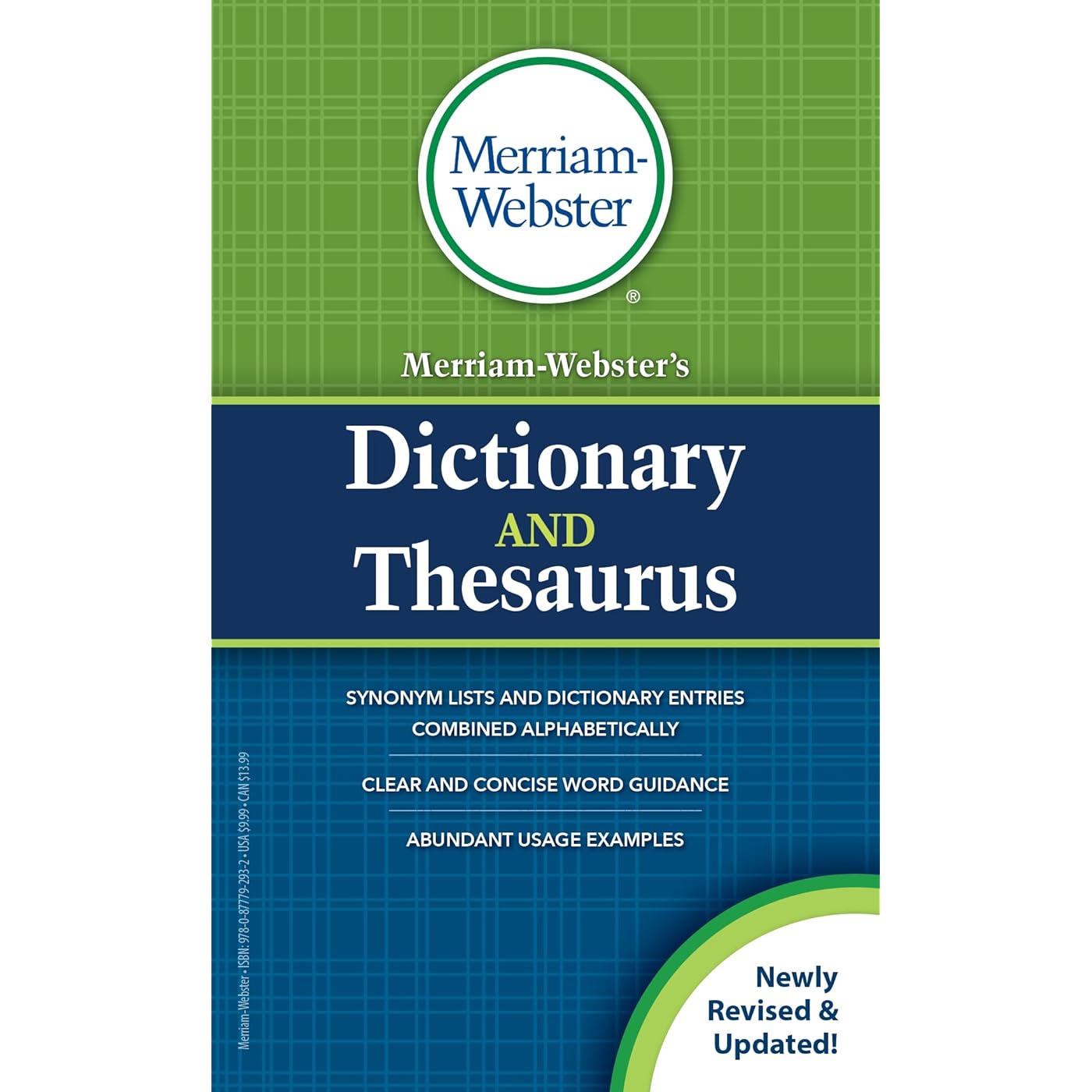
I bought Webster's Dictionary & Thesaurus because I wanted two references in one book, and the combination seemed practical for writing. The dictionary side gives clear definitions, and the thesaurus side offers synonyms when I am stuck on a word. I used it while drafting letters and essays, and having both tools in one volume saved me from juggling two books. A handy all in one reference. It has become one of those small everyday upgrades that I genuinely appreciate. —Jessica Lee
I started using Webster's Dictionary & Thesaurus at my writing desk, where space is limited and one book beats two. The thesaurus entries are generous, with plenty of alternatives for common words, and the dictionary definitions are concise and accurate. It is not as deep as the Collegiate edition, but for everyday writing it covers what I need. The combined format is genuinely convenient. For anyone on the fence, my experience says this one is well worth trying. —David Martinez
I have been using Webster's Dictionary & Thesaurus for a few weeks, and the thesaurus is the part I value most. When a sentence feels repetitive, a quick look gives me a better word, and the definitions confirm I am using it correctly. The book is compact and well made, and it has earned a permanent spot on my desk. Good value for two references in one. It delivers on its promises, and that consistency is what keeps me coming back. —Amanda Clark
Get It From Amazon Now: Check Price on Amazon & FREE Returns
5. Merriam-Webster's Dictionary for Children
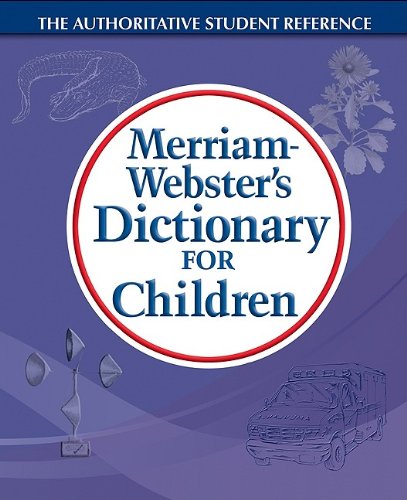
I picked up Merriam-Webster's Dictionary for Children because my daughter kept asking what words meant, and I wanted a dictionary made for her. The entries are written in simple language, with example sentences and colorful illustrations that make looking things up fun. She uses it for homework and reads it just for fun, which is the best review a childrens book can get. A lovely first dictionary. It has earned a permanent spot in my routine, and I would happily buy it again. —Ryan Walker
I grabbed Merriam-Webster's Dictionary for Children for our homeschool shelf, since I wanted a reference the kids could actually use on their own. The definitions are clear, the pictures help with understanding, and the layout is inviting rather than intimidating. My son looked up words for a school project and finished it without asking me for help once. That independence is worth a lot. That reliability is exactly why I keep recommending it to friends and family. —Nicole Harris
I have been using Merriam-Webster's Dictionary for Children alongside my kids, and honestly it has made word learning a shared activity. We look things up together, read the example sentences aloud, and discover new words along the way. The book is sturdy enough for young hands, and the content is pitched just right. A wonderful gift for any young reader. For the quality on offer here, I honestly think it is very hard to beat. —Kevin Moore
Get It From Amazon Now: Check Price on Amazon & FREE Returns
Why The Merriam-webster Dictionary Is Necessary
A printed dictionary feels old fashioned until you actually use one, and then you remember why they lasted so long. Looking up a word in a book is slower than typing it into a search bar, but it is also more focused: no ads, no distractions, and you often stumble on neighboring words that teach you something new. That is a real pleasure.
Different dictionaries serve different readers. A compact paperback suits everyday use and travel, a big collegiate edition suits serious writing and study, a medical dictionary demystifies health language, and a childrens dictionary turns homework into discovery. The right choice depends on who will use it and what they need it for.
What I learned across this test is that authority matters in a dictionary. Merriam Webster has been defining American English for generations, and the definitions feel trustworthy in a way that random web results do not. Pick the edition that fits your reader, keep it within reach, and you will use it far more than you expect.
My Buying Guides on The Merriam-webster Dictionary
Why I Looked for The Merriam-Webster Dictionary
I looked for a printed dictionary because I wanted a focused, trustworthy reference without screens and distractions. I wanted to settle spelling debates, improve my writing, and give my kids a tool they could use on their own.
What I Check Before Buying
Before buying, I check the edition, the number of entries, and whether the definitions suit the reader. I also look at the print size, the binding quality, and whether it includes pronunciations and example sentences. A dictionary should last for years.
My Preference for Pocket or Collegiate Editions
I prefer the pocket paperback for everyday use and travel, and the Collegiate hardcover for serious writing at home. The pocket edition goes everywhere with me, while the big edition stays on my desk for the questions that need real depth.
What I Look for in Quality
Quality to me means clear definitions, accurate pronunciations, and a binding that survives daily use. I check the print size first, since tiny type ruins a dictionary, and I look for example sentences that show how a word is actually used.
How I Compare Prices
I compare by what each edition offers for its price, since a cheap dictionary with few entries is poor value. A good dictionary lasts a decade or more, so the cost per year is tiny. I would rather pay a little more for the edition I will actually use.
My Tips for Choosing the Right One
Match the dictionary to the reader: children need simple definitions and pictures, students need a solid general edition, and writers need the Collegiate. Keep it where you read and write, and look things up the moment you wonder, not later.
Final Thoughts
The mass market Merriam Webster paperback is my pick for most people: it is affordable, portable, authoritative, and it answers nearly every everyday question. If you write seriously, add the Collegiate edition to your desk, and if you have kids, the childrens dictionary is a gift they will actually use.
A good dictionary is one of the cheapest investments in clearer thinking you can make. Pick the edition that fits your life, keep it close, and let it settle the next word debate before it even starts.