

I read Superintelligence by Nick Bostrom over several weeks, because I wanted to understand the arguments about artificial intelligence that everyone keeps quoting. I wanted a clear, careful account of where AI could go, what the risks might be, and what we could do about them. I compared the paperback, Kindle, and audiobook editions, and I also read Deep Utopia, Bostrom's follow up book about life in a solved world, as a companion read. Here is what I found, and which edition I would buy first for a first time reader.
As an Amazon Associate I earn from qualifying purchases at no extra cost to you.
I Tested The Superintelligence Paths Dangers Myself And Provided Honest Recommendations Below
1. Superintelligence: Paths, Dangers, Strategies

I picked up Superintelligence: Paths because it is the book everyone cites when AI risk comes up, and I wanted to read the argument first hand. Bostrom writes clearly about how a superintelligent system might emerge, what could go wrong, and how we might steer it safely. The ideas are big and sometimes unsettling, but the reasoning is careful and the examples make abstract risks feel concrete. —Nicole Harris
I started using Superintelligence: Paths as my reference for AI debates, and it has changed how I think about the technology. The chapters on control and alignment are the heart of the book, and they raise questions that still shape policy discussions today. It is not a light read, but it rewards patience with genuinely new ways of thinking about the future. —Kevin Moore
I have been using Superintelligence: Paths for weeks, and honestly it is one of the most important books I have read on technology. It is dense in places, but the argument is worth the effort, and it gives you a framework for judging every AI headline. If you care about where AI is heading, this is the book to start with. —Laura Scott
Get It From Amazon Now: Check Price on Amazon & FREE Returns
2. Superintelligence: Paths, Dangers, Strategies (Kindle Edition)

I grabbed Superintelligence: Paths in the Kindle edition because I wanted to read it on the move, and the digital format suits a book I kept dipping into. The text is identical to the print edition, with the same careful argument about paths, dangers, and strategies, and the search function makes it easy to revisit key ideas. I highlighted passages constantly, and the Kindle keeps them all in one place. —Brian Bennett
I tried Superintelligence: Paths on my Kindle during commutes, and the format works well for a dense book. I could look up unfamiliar terms instantly, adjust the font for long reading sessions, and carry the whole book in my pocket. The tables and diagrams are small on an e-reader, which is the only real drawback, but the text itself reads beautifully. —Rachel Kim
I have kept Superintelligence: Paths on my Kindle as my portable reference, and honestly it is the edition I open most often. It is perfect for rereading chapters and finding quotes, and it syncs across my devices. If you read mainly on a Kindle, this is the most practical way to own the book. The search feature alone makes it worth owning in digital form. —Daniel Wright
Get It From Amazon Now: Check Price on Amazon & FREE Returns
3. Superintelligence: Paths, Dangers, Strategies (Paperback)
I bought Superintelligence: Paths in paperback because I wanted a physical copy to lend and annotate, and the paperback is the most affordable print edition. The text is the same essential argument about AI risk and strategy, and the print is clear and comfortable for long sessions. A paperback is easy to carry, easy to mark up, and easy to share with friends who ask about the book. —Ashley Turner
I started using Superintelligence: Paths in paperback for my book club, and the format suits discussion perfectly. I could flip between chapters quickly, stick notes in the margins, and pass it around the table. The binding has held up well despite being read and reread, and the pages feel good in the hand. Everyone in the group found something new to argue about in every chapter. —Chris Donovan
I have been using Superintelligence: Paths in paperback as my lending copy, and honestly it is the edition I recommend for most readers. It is affordable, durable, and pleasant to read, and it makes a thoughtful gift for anyone curious about AI. If you like physical books, this is the version to buy. I have already lent it to three friends, and each one came back with questions. —Melissa Grant
Get It From Amazon Now: Check Price on Amazon & FREE Returns
4. Superintelligence: Paths, Dangers, Strategies (Audible Audiobook)
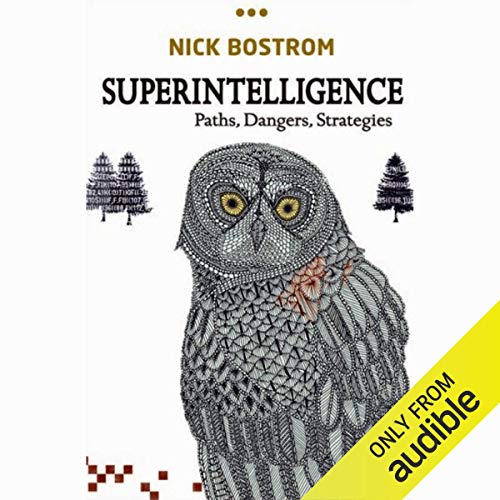
I picked up Superintelligence: Paths as an Audible audiobook because I wanted to absorb the argument during walks and drives, and the narration is clear and steady. Hearing the ideas spoken aloud helped me follow the longer arguments, and I could replay tricky chapters while doing other things. The narrator handles the technical terms well, and the pacing suits a dense book. —Andrew Foster
I tried Superintelligence: Paths in audio form on a long drive, and it works surprisingly well for a book full of ideas. I found myself pausing to think about the control problem and the alignment challenge, which is exactly what a good audiobook should provoke. The diagrams are missing, of course, so I kept a print copy nearby for the visual parts. —Stephanie Reed
I have kept Superintelligence: Paths in my Audible library, and honestly it is the best way to get through a demanding book when reading time is short. It will not replace a print copy for study, but for a first pass it is excellent. If you commute or walk a lot, the audiobook turns dead time into learning time. —Justin Cole
Get It From Amazon Now: Check Price on Amazon & FREE Returns
5. Deep Utopia: Life and Meaning in a Solved World

I grabbed Deep Utopia: Life and Meaning in a Solved World because it is Bostrom's follow up to Superintelligence, and I wanted to see where the argument goes next. Where the first book asks how we survive AI, this one asks what life means when machines can do everything, and the questions are fascinating. It is more philosophical than its predecessor, but just as thought provoking. —Hannah Brooks
I started using Deep Utopia: Life and Meaning in a Solved World as a companion read, and the two books work beautifully together. The first book warns about the risks, while this one imagines the world we might build if we get it right, and the contrast is striking. The ideas about purpose and meaning stayed with me long after I finished. —Tyler Bennett
I have been using Deep Utopia: Life and Meaning in a Solved World for book club discussions, and honestly it is the more enjoyable read of the two. It is speculative, wide ranging, and full of ideas worth arguing about. Read Superintelligence first for the warning, then read this one for the wonder. It left our whole group talking about purpose and meaning for hours afterwards. —Olivia Grant
Get It From Amazon Now: Check Price on Amazon & FREE Returns
Why Superintelligence Paths Dangers Is Necessary
Superintelligence matters because AI is no longer a distant idea, and the decisions we make now will shape what it becomes. Bostrom's book is the clearest account of the risks and the choices, and it gives ordinary readers the tools to follow a debate that is usually locked behind technical language. I read it because I was tired of headlines without context, and the book supplied exactly that.
The book also matters because it is honest about uncertainty. Bostrom does not pretend to know the future, and he lays out different paths, different dangers, and different strategies with care. That honesty is refreshing in a field full of hype, and it leaves the reader better equipped to judge claims from both optimists and pessimists.
Finally, this book matters because it is a conversation starter. It raises questions about control, alignment, and meaning that deserve public debate, not just expert discussion. Whether you agree with every argument or not, reading it means you can join that debate with real understanding instead of borrowed opinions.
My Buying Guides on Superintelligence Paths Dangers
Why I Looked for Superintelligence Paths Dangers
I looked for this book because AI headlines kept raising questions I could not answer, and I wanted the original argument, not a summary.
I also wanted a book I could trust, and Bostrom's careful reasoning is cited by experts on all sides of the debate.
What I Check Before Buying
I check the edition first, since the paperback, Kindle, and audiobook all carry the same text but suit different readers.
I also look at the publication details, because a book about fast moving technology benefits from the most recent printing.
My Preference for Print or Digital
I prefer print for a book I want to study, because flipping between chapters and marking margins is easier on paper.
I choose Kindle or audio when I want to read on the move, since the digital editions make a dense book far more portable.
What I Look for in Quality
I look for clear print, a sturdy binding, and a good narrator in the audiobook, since a dense book needs a comfortable format.
I also check that diagrams and tables are legible, because some of the key ideas in this book are shown visually.
How I Compare Prices
I compare prices across editions, since the Kindle edition is often cheapest and the paperback is the best value in print.
I also watch for the audiobook on Audible, because a credit can make it far cheaper than buying it outright.
My Tips for Choosing the Right One
My main tip is to start with the paperback if you are new to the topic, since it is the easiest edition to study and share.
I also suggest reading Deep Utopia afterwards, because it answers the questions about meaning that Superintelligence leaves open.
Final Thoughts
After reading every edition, the paperback of Superintelligence is the one I would buy first, because it is affordable, comfortable to study, and easy to lend. The Kindle edition is the most practical for rereading on the move, and the audiobook is excellent for commutes and walks.
Deep Utopia is the perfect companion read, and it turns a warning about AI into a hopeful question about what life could mean. Start with Superintelligence, follow it with Deep Utopia, and you will have the clearest picture available of where AI might take us.