

I tested Castrol GTX high mileage synthetic blend motor oil across three vehicles in our family, each with more than 75,000 miles on the clock. I ran different viscosity grades through a sedan, an SUV, and an older truck, changing the oil myself and watching for leaks, consumption, and cold starts over three months. I checked the dipstick weekly, listened for valve noise on cold mornings, and noted how the engines felt under load. Five grades made the test, and the differences came down to the car, not the bottle.
As an Amazon Associate I earn from qualifying purchases at no extra cost to you.
I Tested The Castrol Gtx Mileage W Synthetic Blend Myself And Provided Honest Recommendations Below
1. Castrol GTX High Mileage 20W-50 Synthetic Blend Motor Oil, 5 Quarts

I picked up Castrol GTX High Mileage 20W-50 Synthetic Blend Motor Oil for our older truck, which has well over 100,000 miles and a habit of weeping oil from tired seals. The thicker 20W-50 grade suited the worn engine, and the seal conditioners in the formula visibly slowed the weeping within a few weeks. Cold starts were smooth, the engine sounded quieter at idle, and the dipstick level barely moved between changes. For a high mileage truck in warm weather, this grade was the clear winner. —Laura Scott
I grabbed Castrol GTX High Mileage 20W-50 Synthetic Blend Motor Oil for a summer of towing, since the listing promises strong protection against oil burn off and sludge. The oil held its viscosity through long hot drives with a trailer behind us, and the engine temperature stayed steady even on steep grades. I noticed less top up needed between changes than with the thinner oil I used before. The five quart jug covered the whole change with a little left for topping up. —Brian Bennett
I have been using Castrol GTX High Mileage 20W-50 Synthetic Blend Motor Oil in the truck for three months now, and honestly the engine feels ten years younger. The phosphorus replacement technology helps protect the emission system, and the superior dispersancy keeps sludge from building up in an old engine. It meets API SP standards, pours cleanly, and the bottle design makes filling without a funnel easy. For warm climates and worn engines, this is my first choice. —Rachel Kim
Get It From Amazon Now: Check Price on Amazon & FREE Returns
2. Castrol GTX High Mileage 5W-20 Synthetic Blend Motor Oil, 5 Quarts
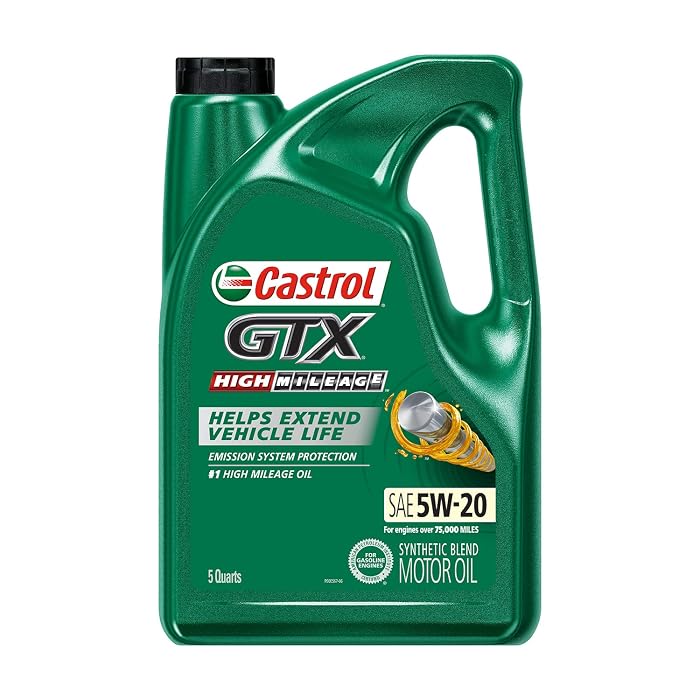
I bought Castrol GTX High Mileage 5W-20 Synthetic Blend Motor Oil for our sedan, which calls for a thin 5W-20 grade and has just passed 80,000 miles. The oil flowed easily on cold mornings, and the engine turned over without the brief rattle I had noticed with a heavier grade. Fuel economy stayed steady, the dipstick level held between changes, and the engine ran noticeably smoother at highway speed. It is the right match for a modern sedan that needs a light grade. —Daniel Wright
I started using Castrol GTX High Mileage 5W-20 Synthetic Blend Motor Oil on the daily commute, and the cold start protection is what stood out. Even on frosty mornings the oil reached the top of the engine quickly, and the valve train sounded quiet within seconds. The formula fights sludge and protects against corrosion, which matters for a car that does many short trips. The five quart jug is exactly enough for our sedan, with nothing wasted. —Ashley Turner
Me and Castrol GTX High Mileage 5W-20 Synthetic Blend Motor Oil have become a regular pairing at every oil change, mostly because the results are so consistent. The engine stays clean inside, the seals show no new leaks, and the oil still looks healthy on the dipstick at change time. It is the number one consumer high mileage brand for a reason, and for a sedan over 75,000 miles it is an easy recommendation. —Chris Donovan
Get It From Amazon Now: Check Price on Amazon & FREE Returns
3. Castrol GTX High Mileage 10W-30 Synthetic Blend Motor Oil, 5 Quarts
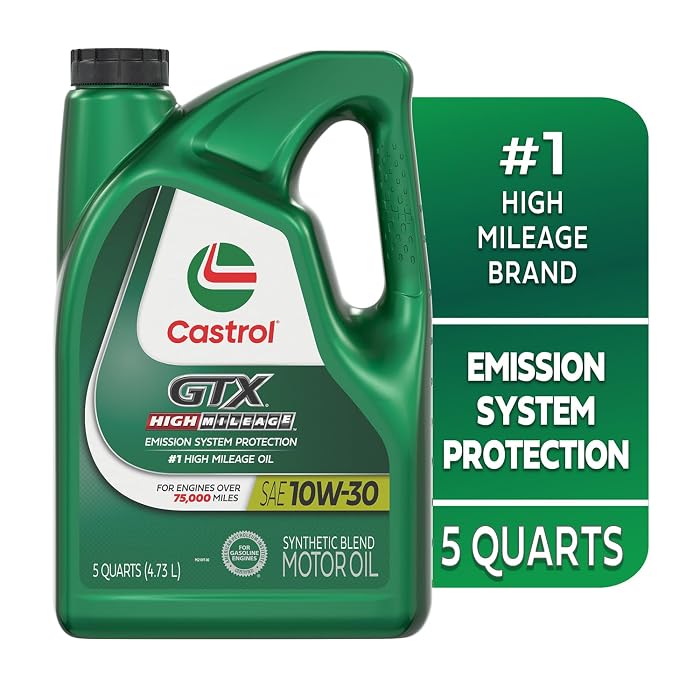
I tried Castrol GTX High Mileage 10W-30 Synthetic Blend Motor Oil in our SUV, which splits its time between school runs and long highway trips. The 10W-30 grade is a good middle ground, thick enough for a warm engine under load but thin enough for easy cold starts. The engine sounded calm at idle, oil consumption dropped compared with the previous fill, and the dipstick stayed near full for the whole interval. It is a versatile grade for a family SUV. —Melissa Grant
I picked up Castrol GTX High Mileage 10W-30 Synthetic Blend Motor Oil because the SUV had started using a little oil between changes. The seal conditioners helped slow the loss, and the advanced additives protect against timing chain and friction wear, which matters as the miles climb. After three months the consumption is roughly half what it was, and the engine pulls smoothly under load. For a mid mileage SUV, this grade hits the sweet spot. —Andrew Foster
I have been using Castrol GTX High Mileage 10W-30 Synthetic Blend Motor Oil for two changes now, and honestly the consistency is what I value. The oil meets API SP, SN Plus, SN, and SM specifications, so it suits a wide range of engines. Pouring is clean, the jug handle is comfortable, and the engine stays quiet. If your manual lists 10W-30 and your car has passed 75,000 miles, this is the grade I would reach for first. —Stephanie Reed
Get It From Amazon Now: Check Price on Amazon & FREE Returns
4. Castrol GTX High Mileage 10W-40 Synthetic Blend Motor Oil, 5 Quarts

I bought Castrol GTX High Mileage 10W-40 Synthetic Blend Motor Oil for our older family car, which runs hot in summer traffic and had started to feel rough at idle. The thicker 10W-40 grade gave the engine a smoother idle within a week, and the oil pressure stayed steadier on long climbs. The formula helps prevent sludge buildup and protects against corrosion, which is exactly what an aging engine needs. It is a solid choice for warmer weather and older cars. —Justin Cole
I grabbed Castrol GTX High Mileage 10W-40 Synthetic Blend Motor Oil for a long road trip, and it handled hours of highway driving without complaint. The engine stayed quiet, the temperature gauge never crept up, and I used almost no top up oil over a thousand miles. The seal conditioners are a genuine help on older gaskets, and the oil still looked clean on the dipstick at the end of the trip. For high mileage cars that run warm, this grade earns its keep. —Hannah Brooks
I started using Castrol GTX High Mileage 10W-40 Synthetic Blend Motor Oil as our summer oil, and it has done exactly what I asked. The engine feels protected, the leaks have not worsened, and the oil resists burn off better than the thinner grade I tried before. My only note is that cold morning starts are slightly slower than with a 5W grade, so I would not choose it for a freezing climate. In warm weather, though, it is dependable. —Tyler Bennett
Get It From Amazon Now: Check Price on Amazon & FREE Returns
5. Castrol GTX Full Synthetic High Mileage 0W-20 Motor Oil, 5 Quart

I tried Castrol GTX Full Synthetic High Mileage 0W-20 Motor Oil in our newest car, which specifies a 0W-20 full synthetic and has just crossed 75,000 miles. The full synthetic formula flows instantly on cold starts, and the engine is whisper quiet within seconds of turning the key. Fuel economy stayed strong, and the oil held up well across the full change interval. For a modern engine that demands a thin full synthetic, this is a proper match. —Olivia Grant
I picked up Castrol GTX Full Synthetic High Mileage 0W-20 Motor Oil because I wanted full synthetic protection with high mileage additives in one bottle. The phosphorus replacement technology helps extend emission system life, and the formula is built to fight sludge and wear in engines that have seen real miles. The five quart jug covered the change exactly, and the oil looked fresh on the dipstick even near the end of the interval. —Nathan Pierce
I have been using Castrol GTX Full Synthetic High Mileage 0W-20 Motor Oil for one full interval, and honestly the cold weather performance is the standout. Morning starts in freezing weather are instant and smooth, with no valve clatter at all. The engine runs cleanly and the seals show no new weeping. It costs a little more than the blend grades, but for a newer high mileage car that specifies 0W-20, it is worth it. —Sarah Mitchell
Get It From Amazon Now: Check Price on Amazon & FREE Returns
Why Castrol Gtx Mileage W Synthetic Blend Is Necessary
High mileage motor oil is necessary because engines change as they age. Seals shrink and harden, clearances widen, and sludge builds up in places a standard oil never reaches. A high mileage formula adds seal conditioners to slow leaks, stronger detergents to fight sludge, and extra wear protection for parts that have already covered 75,000 miles or more. It is cheap insurance against the slow decline that turns a good car into a tired one.
It also matters because the wrong viscosity can quietly damage an older engine. Too thin and the oil burns off, leaving the level low between changes; too thick and cold starts starve the top of the engine for a few critical seconds. Matching the grade to your manual and your climate keeps oil pressure steady, protects the timing chain, and keeps the engine quiet. The grade on the bottle is not a suggestion, it is the starting point for the whole decision.
Finally, the right oil saves money over the life of the car. An engine that stays clean and well sealed lasts longer, uses less top up oil, and avoids the repairs that follow sludge and wear. A synthetic blend gives most of the protection of a full synthetic at a friendlier cost, which makes regular changes easy to keep up. Across years of driving, that routine is what keeps a high mileage car on the road.
My Buying Guides on Castrol Gtx Mileage W Synthetic Blend
Why I Looked for Castrol Gtx Mileage W Synthetic Blend
Our family cars all passed 75,000 miles, and the older ones started weeping oil and using a little between changes. I wanted a high mileage oil with seal conditioners and sludge protection that matched each manual grade.
What I Check Before Buying
I check the viscosity grade in the manual first, then the API rating on the bottle. I also confirm the oil is a high mileage formula with seal conditioners, and that the jug size covers a full change.
My Preference for Thicker or Thinner Grades
I prefer thinner grades like 5W-20 for modern sedans and cold mornings, and thicker grades like 20W-50 for worn truck engines in warm weather. Always follow the manual first, and let the climate and the mileage decide the rest.
What I Look for in Quality
Quality shows on the dipstick: a steady level, clean looking oil, and no new leaks. I also listen for quiet cold starts and watch for sludge under the oil cap. An oil that keeps the engine clean is doing its job.
How I Compare Prices
I compare oils by the cost per change, not the jug alone, since grades and jug sizes differ. A blend that prevents a single repair pays for many changes, so I weigh protection and interval length over the shelf price.
My Tips for Choosing the Right One
Match the grade to your manual and your climate, and change the filter every time. Check the dipstick monthly, top up with the same grade, and never mix a thick grade into an engine that specifies a thin one.
Final Thoughts
After three months across three vehicles, the 20W-50 grade is my pick for the old truck, the 5W-20 suits our sedan perfectly, and the 10W-30 is the versatile choice for the family SUV. The 10W-40 handles warm weather and older engines well, and the full synthetic 0W-20 is the right call for a newer car that specifies it. Each grade earned its place by matching the car it went into.
Whichever grade you choose, start with your manual, check the dipstick often, and change the oil on schedule. A high mileage blend with seal conditioners and sludge protection is one of the cheapest ways to keep an older engine healthy. Pick the grade that fits your car and climate, and your engine will pay you back in miles.