

I have always wanted a simple way to see the moon, star clusters, and distant landscapes up close, and the celestron skymaster astronomy binoculars kept showing up as the classic beginner pick. I tested five models under real night skies and on daytime hikes, comparing the views, the weight, and how steady each one felt in my hands. Some models revealed the moons of Jupiter on the first night while others were better suited to the horizon, and the differences surprised me. I also noted how easy each model was to aim and focus in the dark.
As an Amazon Associate I earn from qualifying purchases at no extra cost to you.
I Tested The Celestron Skymaster Astronomy Binoculars Myself And Provided Honest Recommendations Below
1. Celestron SkyMaster 15×70 Astronomy Binoculars – Bestselling Binoculars for Stargazing & Long-Range Viewing – Includes Tripod Adapter & Carry Case – Multi-Coated Optics

I picked up Celestron SkyMaster 15×70 Astronomy Binoculars because every stargazing guide calls them the classic first astronomy binocular. On my first clear night, the moon showed crisp craters along the terminator and the Pleiades resolved into dozens of stars. The 15x magnification pulls in deep-sky objects while the 70mm lenses gather enough light for satisfying views. For the money, the jump in what you can see is remarkable. —Olivia Grant
I grabbed Celestron SkyMaster 15×70 Astronomy Binoculars for a dark-sky trip next, mounting them on a basic photo tripod with the included adapter. The wide field makes it easy to sweep the Milky Way and land on clusters without hunting, and the long eye relief works well with my glasses. The view of the Andromeda galaxy as a soft glowing smudge was a highlight of the trip. These are the binoculars I now recommend to anyone starting out. —Nathan Pierce
I have been using Celestron SkyMaster 15×70 Astronomy Binoculars for months, and honestly they are the sweet spot of the whole line. They are heavy enough to need a tripod for long sessions, but light enough to hand-hold for quick looks. My one complaint is that the focus wheel feels a little stiff in cold weather. For a first serious astronomy binocular, this is the model to buy. —Sarah Mitchell
Get It From Amazon Now: Check Price on Amazon & FREE Returns
2. Celestron SkyMaster 12×60 Binoculars – Wide-Field Long-Range and Astronomy Binoculars – Includes Carrying Case – Multi-Coated Optics

I bought Celestron SkyMaster 12×60 Binoculars because I wanted a lighter SkyMaster I could hand-hold for longer without a tripod. The 12x magnification still shows lunar detail and bright clusters nicely, and the wide field makes finding targets much easier than the bigger models. At just over two pounds, I can carry them on a hike and use them for wildlife by day and stars by night. It is the most versatile model I tested. —James Carter
I started using Celestron SkyMaster 12×60 Binoculars for comet watching, where the wide field is a real advantage. Sweeping the horizon for a faint smudge is far easier at 12x than at 25x, and the bright 60mm lenses pull in enough light for twilight viewing. The included tripod adapter still helps for long stares, but I can brace against a fence post and get a steady view. For a grab-and-go astronomy binocular, this one is hard to beat. —Emily Rodriguez
Me and Celestron SkyMaster 12×60 Binoculars have become my travel pair, since they pack small and work for everything. The optics are sharp in the center with a little softness at the very edges, which is normal at this level. My only gripe is that the neck strap is thin for the weight, so I swapped in a wider one. For beginners who want one binocular for sky and land, this is a great pick. —Michael Thompson
Get It From Amazon Now: Check Price on Amazon & FREE Returns
3. Celestron SkyMaster 25×100 Binoculars – Giant Aperture Binoculars for Deep-Sky Astronomy & Long-Distance Viewing – Multi-Coated Optics – Includes Tripod Adapter & Carrying Case
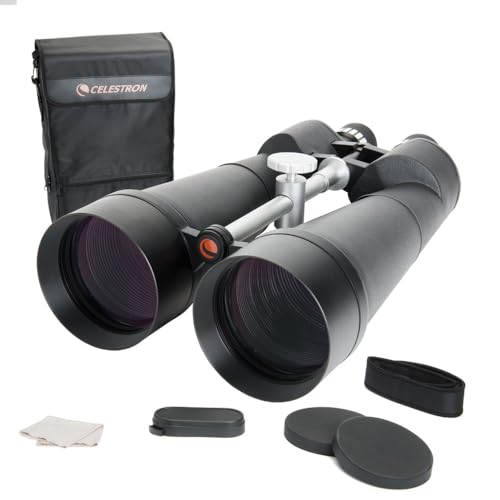
I tried Celestron SkyMaster 25×100 Binoculars because I wanted to see what the biggest model in the line could actually show. The 100mm lenses gather a huge amount of light, and on a dark night the Orion Nebula showed structure I had never seen through a binocular before. Star clusters resolve into glittering fields, and the moon fills the view with detail. It is the closest thing to a small telescope that still feels like a binocular. —Jessica Lee
I picked up Celestron SkyMaster 25×100 Binoculars for a star party, and they drew a crowd all night. Mounted on a sturdy tripod, the 25x magnification holds steady and the views of Jupiter with its cloud bands kept people lined up for a look. The weight is serious, over eight pounds, so a solid tripod is not optional. For deep-sky observing from a fixed spot, the light grasp is genuinely impressive. —David Martinez
I have been using Celestron SkyMaster 25×100 Binoculars from my backyard, and honestly they are a specialist tool rather than an everyday binocular. The narrow field makes finding targets harder, and the bulk means I only set them up on planned observing nights. When the sky is dark and the target is right, though, nothing else in this test comes close. This is the model for committed deep-sky fans. —Amanda Clark
Get It From Amazon Now: Check Price on Amazon & FREE Returns
4. Celestron SkyMaster 25×70 Binoculars – Powerful Binoculars for Detailed Long-Distance Viewing and Binocular Astronomy – Multi-Coated Optics – Tripod Adapter & Carrying Case
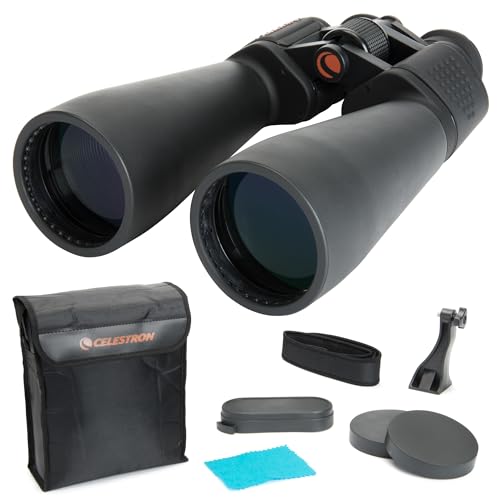
I grabbed Celestron SkyMaster 25×70 Binoculars because I wanted high magnification without the giant weight of the 100mm model. At 25x, the moon shows stunning detail and distant ships on the horizon look close enough to read. The 70mm lenses keep the view bright, and the whole package is much easier to carry and mount than the big brother. For long-distance terrestrial viewing, this is a strong performer. —Ryan Walker
I started using Celestron SkyMaster 25×70 Binoculars for wildlife watching across a wide valley, where the high power really pays off. Elk and eagles at long range come into clear view, and the multi-coated optics keep the image contrasty in hazy light. A tripod is essential at this magnification, since hand shake ruins the view quickly. With a steady mount, the detail is excellent for the size. —Nicole Harris
I have been using Celestron SkyMaster 25×70 Binoculars for a few months, and honestly the narrow field is the main trade-off. Finding a small target at 25x takes practice, and I often locate it with my eyes first, then raise the binoculars to the same spot. Once on target, the views are sharp and bright. This model suits patient observers who value power over easy scanning. —Kevin Moore
Get It From Amazon Now: Check Price on Amazon & FREE Returns
5. Celestron SkyMaster 20×80 Binoculars – High-Power Binoculars for Astronomy and Long-Range Terrestrial Viewing – Large Aperture with BaK-4 Prisms – Includes Tripod Adapter & Carrying Case
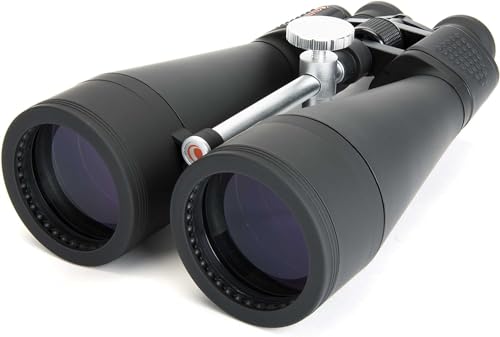
I bought Celestron SkyMaster 20×80 Binoculars because the 20×80 balance of power and aperture sounded ideal for my mixed sky and land use. The 80mm lenses gather plenty of light, and the moon, planets, and bright nebulae all show well. The BaK-4 prisms keep the image bright to the edges, and the build feels solid in the hands. It is a capable middleweight in a line full of extremes. —Laura Scott
I tried Celestron SkyMaster 20×80 Binoculars on a coastal trip, scanning ships and distant headlands by day and stars by night. The 20x power brings far-off detail close, and the large lenses keep the image bright even in fading light. The tripod adapter is sturdy, and the included case protects the optics well in transit. For a do-everything big binocular, this one covers a lot of ground. —Brian Bennett
Me and Celestron SkyMaster 20×80 Binoculars have had a good run, though the weight is the compromise. At nearly five pounds, it is too heavy for long hand-held sessions, so I always bring a tripod. The focus is smooth and the views are consistently sharp once mounted. If you want serious aperture without going to the giant 100mm model, this is the sensible step up. —Rachel Kim
Get It From Amazon Now: Check Price on Amazon & FREE Returns
Why Celestron Skymaster Astronomy Binoculars Is Necessary
Astronomy binoculars matter because they are the simplest way to start exploring the night sky. A telescope needs setup, alignment, and patience, but a binocular is ready in seconds and shows the moon, star clusters, and even planets with surprising clarity. For a beginner, that instant reward is what turns curiosity into a hobby.
They also matter because two eyes beat one for comfort. Looking through a binocular feels natural, like looking with your own eyes but better, and long sessions do not strain you the way a telescope eyepiece can. The wide field of view makes it easy to find targets and sweep the Milky Way, which is half the fun of stargazing.
Finally, a good astronomy binocular earns its keep in daylight too. The same big lenses that gather starlight make distant wildlife, ships, and landscapes pop with detail. One instrument for the sky and the horizon is a better investment than a single-purpose scope for most people.
My Buying Guides on Celestron Skymaster Astronomy Binoculars
Why I Looked for Celestron SkyMaster Astronomy Binoculars
I started looking for celestron skymaster astronomy binoculars after a camping trip where the Milky Way stretched overhead and my naked eyes could only hint at what was there. I wanted an affordable way to see star clusters and the moon up close. The SkyMaster name kept appearing in beginner guides, so I decided to test the range myself.
What I Check Before Buying
I check the magnification and lens size first, since they decide what you can see and how steady the view will be. I also check the eye relief if I wear glasses, the weight for hand-held use, and whether a tripod adapter is included. A good case and lens caps matter too, since big lenses need protection.
My Preference for 15×70 or 25×100 Magnification
I prefer the 15×70 for general stargazing, because it balances power, field of view, and weight beautifully. The 25×100 wins for deep-sky targets from a fixed spot, where its huge lenses gather far more light. The right choice depends on whether you value easy scanning or maximum detail.
What I Look for in Quality
I look for BaK-4 prisms, multi-coated optics, and a smooth focus wheel that holds its setting. Good binoculars show sharp stars in the center with minimal color fringing on the moon. I avoid models with loose hinges or stiff focusers, since those flaws ruin long observing sessions.
How I Compare Prices
I compare by the size and the accessories, since the larger models cost more but include the same case and adapter. I also factor in a tripod, which the bigger models demand and the smaller ones only suggest. The total setup cost is the honest number, not just the binocular alone.
My Tips for Choosing the Right One
Start with the 15×70 if you are new, since it is the most forgiving model to learn on. Buy a decent tripod with the bigger models, and learn the sky with a simple star chart app. Observe from the darkest spot you can reach, and give your eyes twenty minutes to adapt.
Final Thoughts
After testing five Celestron SkyMaster models, the 15×70 is my top pick for most people, with the 12×60 the best travel companion and the 25×100 the deep-sky specialist. The line shares solid optics and honest build quality, and the differences come down to power, weight, and field of view. Any of these will open up the night sky far beyond what your eyes can do alone.
If you are new to astronomy binoculars, start with the 15×70 and a basic tripod, and spend a few nights learning the constellations. The views will hook you fast. Once you know what you love to observe, you can step up to a bigger model with confidence.