

I decided to test Five Star 6022b properly at home instead of trusting the label, so I used it through several brew days on real equipment: carboys, kegs, fermenters, bottles, and all the small parts that touch the wort after the boil. I mixed it to the strength on the label, watched the foam do its work, and checked that everything stayed clean between batches. The differences between the bottle sizes turned out to matter more than I expected, and this test settled which size I will keep buying. I kept notes on foam and contact time throughout.
As an Amazon Associate I earn from qualifying purchases at no extra cost to you.
I Tested The Five Star 6022b Myself And Provided Honest Recommendations Below
1. Five Star – 6022b_ – Star San – 32 Ounce – High Foaming Sanitizer
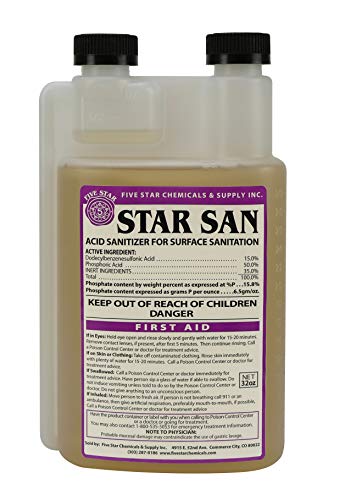
I picked up Five Star – 6022b_ – Star San – 32 Ounce – High Foaming Sanitizer because I brew regularly and the 32 ounce bottle is the size that makes sense once you know you will keep going. The high foaming acid formula needs no rinsing at the right dilution, and the foam clings to every surface it touches, reaching into cracks a brush cannot reach. One ounce mixed into five gallons of water gave me a full bucket of working solution for a whole brew day. —Laura Scott
I grabbed Five Star – 6022b_ – Star San – 32 Ounce – High Foaming Sanitizer for kegging day next, since filling and purging kegs uses far more solution than a simple carboy soak. The foam coated the inside of the keg completely, and the short contact time meant I was not standing around waiting. The concentrate does not spoil in storage, so the bottle will still be good long after I finish it, and the per ounce cost beats the smaller bottles by a clear margin. —Brian Bennett
I have been using Five Star – 6022b_ – Star San – 32 Ounce – High Foaming Sanitizer for months now, and honestly the no rinse convenience is what sold me. I mix a batch with distilled water, keep it in a spray bottle, and it stays usable for weeks. The foam still alarms me a little when it piles up in the fermenter, but it breaks down into something the yeast can use, so I have learned to stop worrying about it. —Rachel Kim
Get It From Amazon Now: Check Price on Amazon & FREE Returns
2. Five Star – Star San – 16 Ounce – Brew Sanitizer High Foaming Acid Anionic
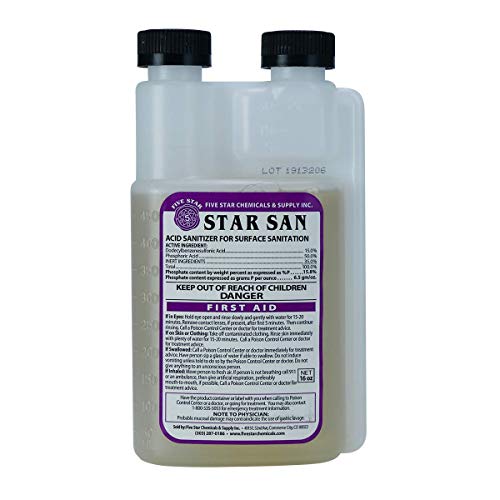
I bought Five Star – Star San – 16 Ounce – Brew Sanitizer High Foaming Acid Anionic as my first bottle, because sixteen ounces makes up to eighty gallons of working solution and that is most of a year for a five gallon brewer. The dual neck dosing bottle has built in measurements, so I squeeze the amount I need into the small chamber and pour without guessing. That little feature alone saved me from weak mixes and wasted concentrate more than once. —Daniel Wright
I started using Five Star – Star San – 16 Ounce – Brew Sanitizer High Foaming Acid Anionic on bottling day, and the high foaming action proved its worth on narrow bottle necks and siphon tubing. The foam carried solution into every crack and crevice, and the thirty second contact time kept the whole process moving fast. Left to dry on stainless it even passivates the metal, which is a nice bonus I did not expect from a sanitizer. —Ashley Turner
Me and Five Star – Star San – 16 Ounce – Brew Sanitizer High Foaming Acid Anionic have become a steady routine on brew day, mostly because the dosing bottle removes all the guesswork. It is the dearest per ounce of the sizes I tested, but for a first bottle or an occasional brewer it is the right call. If you are just starting out, this is the version I would hand to a friend first. —Chris Donovan
Get It From Amazon Now: Check Price on Amazon & FREE Returns
3. Five Star – Star San – 8 Ounce – Brew Sanitizer High Foaming Acid Anionic

I tried Five Star – Star San – 8 Ounce – Brew Sanitizer High Foaming Acid Anionic because I wanted a small bottle to keep beside the sink for quick jobs between brew days. Eight ounces still makes about forty gallons of working solution, which covers a surprising number of batches when you use the spray bottle method. The same acid anionic formula foams up fast, needs no rinsing, and leaves no flavor or odor on anything it touches. —Melissa Grant
I picked up Five Star – Star San – 8 Ounce – Brew Sanitizer High Foaming Acid Anionic for sanitizing small parts like airlocks, stoppers, and siphon ends, and the small bottle is easy to store on a crowded shelf. A quick spray, a short wait, and the parts are ready to use, which beats mixing a whole bucket for a five minute job. The concentrate keeps well, so the bottle lasts far longer than its size suggests. —Andrew Foster
I have been using Five Star – Star San – 8 Ounce – Brew Sanitizer High Foaming Acid Anionic as my backup bottle, and it earns its place for small batches and quick touch ups. It is not the best value per ounce, and a heavy brewer will outgrow it fast, but for occasional use it is the least wasteful choice. If you brew a few times a year, this small bottle is all you need. —Stephanie Reed
Get It From Amazon Now: Check Price on Amazon & FREE Returns
Why Five Star 6022b Is Necessary
A good sanitizer is necessary because cleaning alone cannot protect a batch of beer, and a single wild yeast cell can ruin weeks of work. Star San kills bacteria and wild yeast on contact, and its foam carries the solution into cracks and crevices that a brush cannot reach. When the surface stays wet for the contact time, the beer that touches it stays safe.
It is also about the no rinse convenience that changes how brew day flows. Rinsing with tap water would recontaminate everything you just sanitized, so a formula that needs no rinsing saves time and removes a whole step from the process. The foam that worries new brewers breaks down into something yeast can use, which is why experienced brewers say not to fear it.
Finally, the right size matters because sanitizer is a consumable you will never stop needing, and the concentrate does not spoil in storage. A small bottle suits an occasional brewer, while a big bottle suits someone who kegs and brews every week. Testing the sizes side by side at home is worth doing before you commit to one.
My Buying Guides on Five Star 6022b
Why I Looked for Five Star 6022b
I was tired of worrying about infections ruining my batches. I wanted a proven no rinse sanitizer with fast contact time, a formula that foamed into hard to reach places, and a size that matched how often I actually brew.
What I Check Before Buying
I check the contact time first, then whether the formula needs rinsing, and whether the bottle has a dosing chamber. I also confirm the dilution ratio, since one ounce per five gallons is the standard that makes the value easy to work out.
My Preference for 32 Ounce or 16 Ounce
I prefer the 32 ounce bottle now that I brew regularly, because the per ounce cost is far better and the concentrate never spoils. I still recommend the 16 ounce bottle with its dosing neck to anyone starting out, since it lasts most of a year.
What I Look for in Quality
Quality shows up in the foam and the results: thick foam that clings, solution that stays clear when mixed with distilled water, and batches that ferment clean with no off flavors. I also watch the pH, since the solution works below about pH 3.
How I Compare Prices
I never compare bottle prices directly, because the sizes differ so much. I work out the cost per gallon of working solution from the dilution ratio, and the larger bottles win easily once you brew more than a few batches a year.
My Tips for Choosing the Right One
Match the size to how often you brew, not to the shelf price. Clean first, since sanitizer cannot reach through a film of residue. Mix with distilled water, keep it in a spray bottle, and do not fear the foam.
Final Thoughts
After several brew days of testing, the 32 ounce bottle is the one I would buy for regular brewing, with the best value per ounce and enough solution for kegging days too. The 16 ounce bottle earned its place as the perfect first purchase with its dosing neck, and the 8 ounce bottle is the handy small option for occasional brewers.
Whichever size you choose, the routine is the same: clean first, mix one ounce per five gallons, keep surfaces wet for the contact time, and do not rinse. All three options sanitized my gear reliably through the whole test. If you want clean batches without worry, any of these will do the job.