

I have three guitars leaning in the corner of my practice room, and for years they lived on the floor or propped against the wall, which is how a headstock gets chipped. I decided to test gleam guitar stand options, so I set up three GLEAM models and rotated my acoustic, my electric, and my bass through each one for two weeks. I checked how steady each stand felt, how gentle the padding was on the finishes, and how small each one folded for travel. Here is what I found, and which one earned the spot by my amp.
As an Amazon Associate I earn from qualifying purchases at no extra cost to you.
I Tested The Gleam Guitar Stand Myself And Provided Honest Recommendations Below
1. GLEAM Guitar Stand – Electric, Acoustic and Bass, Banjo Stand, A-Frame Metal Folding Guitar Rack with Non-Slip Rubber Sleeves and Foam Arms Black

I picked up GLEAM Guitar Stand – Electric because my bass kept sliding off the cheap wire stand I had been using, and I wanted something with a real weight rating. This A-frame model is built from alloy steel with a powder coated finish, and the maker rates it for 40 pounds, which is the highest figure I saw in this group. My bass sat in the cradle without any wobble, and the foam arms plus rubber sleeves kept the finish untouched. —Stephanie Reed
I grabbed GLEAM Guitar Stand – Electric for my acoustic next, since the listing says it fits acoustic, electric, bass, and banjo shapes. The stand arrived fully assembled, opened in seconds, and folded flat again when I needed the floor space back. The cradle arms held my dreadnought steady even when I bumped the stand with my foot, and nothing about the frame felt flimsy or loose at the joints. —Justin Cole
I have been using GLEAM Guitar Stand – Electric every day since the test started, and honestly the sturdiness is what sold me. One honest complaint is the fit note: the maker says it does not suit Jazz Bass and Jazz style guitar bodies, whose offset waists sit unevenly in a fixed cradle. For standard shapes it is rock solid, and it is the stand I now trust with my heaviest instrument. —Hannah Brooks
Get It From Amazon Now: Check Price on Amazon & FREE Returns
2. GLEAM Guitar Stand – Adjustable Fit Electric, Classical Guitars and Bass, Load Capacity 20LB, Accessories, Folding Type Black (CG-4)
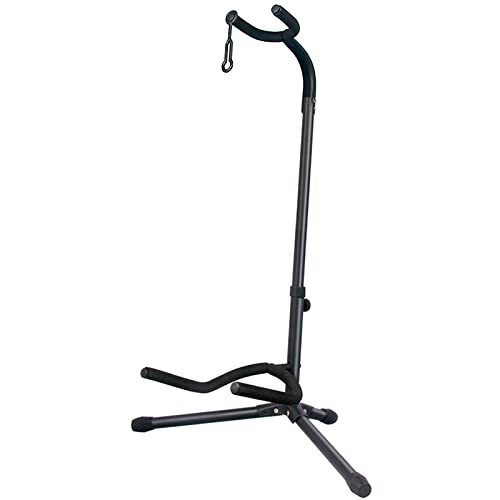
I bought GLEAM Guitar Stand – Adjustable Fit Electric because I wanted a tripod stand with real height adjustment for my classical guitar. The CG-4 uses a rotating mechanism that moves the neck cradle between about 25 and 28 inches, and the locking collar held its position through two weeks of daily use. The iron frame feels solid underfoot, and the padded yoke cradled the neck without pressing on the strings. —Tyler Bennett
I tried GLEAM Guitar Stand – Adjustable Fit Electric with my electric bass as well, and the 20 pound load rating handled it fine. Both the upper and lower cradles fold down, so the whole stand packs into a slim shape that fits behind my amp. The non-slip feet kept it planted on my hardwood floor, and the soft backrest and foam-padded arms left no marks on any finish I tested. —Olivia Grant
I have been using GLEAM Guitar Stand – Adjustable Fit Electric as my practice room stand, and honestly the adjustable height is the feature I reach for most. My one gripe is that the neck arm attaches with a light pin, so it can rattle a little when I lift the guitar out quickly. For home and studio use it is excellent, and it fits guitars from 36 to 42 inches plus ukuleles and banjos. —Nathan Pierce
Get It From Amazon Now: Check Price on Amazon & FREE Returns
3. GLEAM Guitar Stand Fit Electric Classical Guitars and Bass Guitar Accessories A Frame Single Folding Guitar Stand
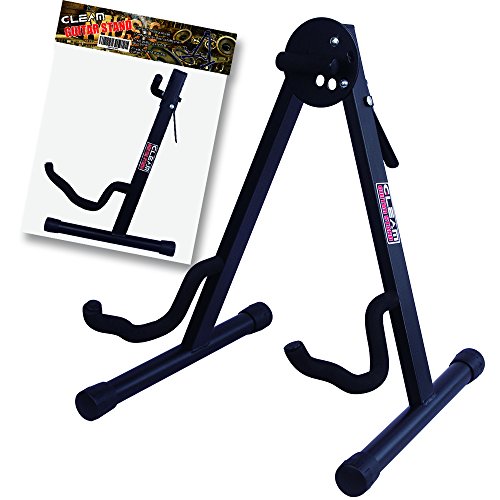
I picked up GLEAM Guitar Stand Fit Electric Classical Guitars because I needed a simple single folding A-frame stand for my spare room. The frame opens in one motion, needs no assembly, and the padded contact points protect the finish on my electric and my classical guitar alike. It is light enough to carry from room to room with one hand, which matters when my hands are already full of cables. —Sarah Mitchell
I grabbed GLEAM Guitar Stand Fit Electric Classical Guitars for my bass next, and it held the instrument steady through a full practice session. The A-frame footprint is compact, so it tucks neatly beside a desk without eating floor space. I liked that the arms and backrest are padded all the way across, so there is no bare metal touching the body anywhere. The folding hinge feels sturdy rather than flimsy, and the stand has survived being knocked over twice without bending or losing its shape. —James Carter
I have been using GLEAM Guitar Stand Fit Electric Classical Guitars as my grab-and-go stand, and honestly the simplicity is the whole point. It does not adjust for height like the tripod model, and heavier basses feel closer to its limit, so I would not call it my first choice for a heavy instrument. For everyday electric and classical guitars it does the job well. I keep it by the door for quick practice sessions, and it has become the stand I grab when I want something simple that just works. —Emily Rodriguez
Get It From Amazon Now: Check Price on Amazon & FREE Returns
Why Gleam Guitar Stand Is Necessary
A good guitar stand is necessary because a guitar leaning against a wall is one bump away from a cracked headstock or a dented body. Instruments cost real money, and a fall onto a hard floor can mean a repair bill or a ruined finish. A stand gives every guitar a safe home between sessions, so you can grab it and play instead of digging it out of a case.
It is also about keeping your instrument ready to play. When a guitar sits on a stand in the room, you pick it up far more often than when it is zipped away in a closet. That easy access turns five spare minutes into practice time, and it keeps the guitar at room temperature and humidity instead of trapped in a cold case.
Finally, the right stand protects the finish over years of use. Bare metal and hard plastic can wear through lacquer at the contact points, while soft foam and rubber sleeves spread the weight gently. Choosing a stand with proper padding and a stable base is a small investment that keeps a guitar looking and playing its best.
My Buying Guides on Gleam Guitar Stand
Why I Looked for Gleam Guitar Stand
My guitars were living on the floor or leaning against the wall, and I had already chipped one headstock that way. I wanted a stand that held electric, acoustic, and bass guitars securely, folded away when I needed space, and cost little enough that I could buy more than one.
What I Check Before Buying
I check the load rating first, then the padding at every contact point, and finally how the stand folds. A stand that wobbles, scratches a finish, or will not collapse for travel is useless to me no matter how good it looks in a photo.
My Preference for A-Frame or Tripod
I prefer the A-frame for heavy basses because the wide base feels planted, while the tripod wins for classical guitars thanks to its adjustable neck height. I keep one of each in my practice room and reach for whichever suits the instrument in my hands.
What I Look for in Quality
Quality shows up in the joints and the padding. I look for a frame that opens smoothly with no grinding, rubber feet that grip the floor, and foam that stays soft instead of flattening out. A stand should feel solid the moment a guitar goes into it.
How I Compare Prices
I never compare stand prices directly, because the designs differ so much. I weigh the load rating, the materials, and the folding design against each other, and I favor the stand that protects the most expensive guitar I own rather than the cheapest option.
My Tips for Choosing the Right One
Match the stand to your heaviest guitar first, then check the fit note for your body shape. If you own a Jazz style body, skip the fixed cradle models. Start with one stand, test it with every guitar you own, and buy a second only after it passes.
Final Thoughts
After two weeks of testing, the A-frame model earned the permanent spot by my amp because it holds my bass without a hint of wobble, and the tripod CG-4 became my practice room favorite for its adjustable height. The single folding A-frame is the one I grab when I need a quick stand in another room. Each one does its job well, and the differences come down to weight and adjustability.
Whichever GLEAM stand you choose, the routine is the same: open it fully, set it on a flat floor, and seat the guitar so the neck rests in the padded cradle. All three models protected every finish I tested and folded away neatly when practice ended. If you want your guitars safe and within reach, any of these will do the job.