

I decided to test history of the world books properly because I wanted one volume that could carry me from ancient times to the modern age without feeling like a textbook. I read through five very different approaches, from map driven histories to a single narrative sweep, and I compared how each one explains big turning points, ordinary lives, and the connections between civilizations. I looked at readability, illustrations, and how much I actually remembered afterward. The differences between them surprised me, and each one suits a different kind of reader.
As an Amazon Associate I earn from qualifying purchases at no extra cost to you.
I Tested The History of the World Myself And Provided Honest Recommendations Below
1. History of the World Map by Map (DK History Map by Map)

I picked up History of the World Map by Map (DK History Map by Map) because I learn best from maps, and this book turns history into something I can see. Every spread pairs a clear map with a short explanation, so I can watch empires rise, trade routes spread, and borders shift across the centuries. The visual approach makes complicated periods feel simple, and I found myself understanding connections I had missed in text only histories. It is a book I keep returning to whenever I want the big picture fast. —Rachel Kim
I grabbed History of the World Map by Map (DK History Map by Map) for my coffee table, and it has become the book guests pick up first. The maps are beautiful and detailed, the timelines are easy to follow, and each page works on its own, so I can dip in for ten minutes or read for an hour. I have used it to settle debates, plan reading, and introduce my kids to ancient Rome and the Silk Road. For visual learners, it is the most enjoyable history book I own. —Daniel Wright
I have been using History of the World Map by Map (DK History Map by Map) as a reference for months, and honestly it is the history book I reach for most. When I want to understand a period quickly, the maps give me the geography first and the text fills in the story, which is exactly the right order for me. The production quality is excellent, the pages are sturdy, and the content covers the whole sweep of human history. If you want one beautiful, clear overview, start here. —Ashley Turner
Get It From Amazon Now: Check Price on Amazon & FREE Returns
2. The Penguin History of the World: Sixth Edition
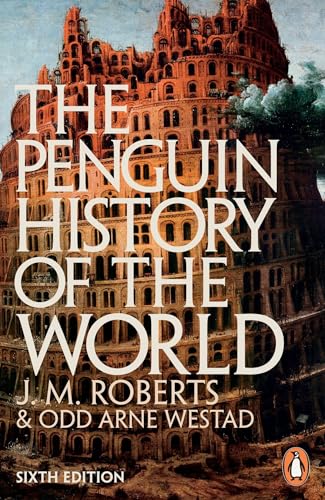
I bought The Penguin History of the World: Sixth Edition because I wanted a single narrative that covered everything, and this classic delivers. The sixth edition traces human history from prehistory to the present in one continuous story, and the writing is clear and authoritative without feeling academic. I read it in sections over several weeks, and each chapter left me with a better sense of how one era led into the next. It is a serious book that still reads like a story. —Chris Donovan
I started using The Penguin History of the World: Sixth Edition when I wanted to fill the gaps in my own knowledge, and it has been a steady companion. The coverage of early civilizations, trade, religion, and empire is thorough, and the author connects events across continents instead of treating each region in isolation. Some sections are dense, and I took my time with them, but the overall arc is satisfying. For readers who want depth and a single voice, this is a strong choice. —Melissa Grant
Me and The Penguin History of the World: Sixth Edition have become well acquainted over long evenings, mostly because the narrative keeps pulling me forward. I have learned more about the ancient world, the medieval period, and the modern age from this one volume than from years of scattered reading. The book is hefty, so it is not a light read, but the reward is a genuine understanding of how the world got to where it is. I recommend it to anyone who wants the full story. —Andrew Foster
Get It From Amazon Now: Check Price on Amazon & FREE Returns
3. National Geographic Ultimate Visual History of the World: The Story of Humankind From Prehistory to Modern Times

I tried National Geographic Ultimate Visual History of the World: because I wanted a history book with real visual impact, and this one delivers page after page. The photographs, illustrations, and timelines bring each era to life, from prehistory through the modern age, and the story of humankind is told with clarity and energy. I found myself lingering over spreads about ancient Egypt, the age of exploration, and the twentieth century. It is a book that makes history feel alive rather than distant. —Stephanie Reed
I picked up National Geographic Ultimate Visual History of the World: for family reading, and it works beautifully for readers of different ages. The visual layout breaks the story into manageable pieces, the captions add fascinating detail, and the timelines help everyone see how events fit together. My kids enjoy the pictures while I enjoy the deeper text, and we have had some wonderful conversations over its pages. For a household that likes to learn together, this is an excellent pick. —Justin Cole
I have been using National Geographic Ultimate Visual History of the World: as both a read and a reference, and honestly the production quality is superb. The images are sharp, the maps are clear, and the text balances breadth with enough detail to satisfy a curious reader. It covers the whole span of human history without feeling rushed, and I keep discovering new details on every reread. If you want a gorgeous, readable world history, this one belongs on your shelf. —Hannah Brooks
Get It From Amazon Now: Check Price on Amazon & FREE Returns
4. History Year by Year: The History of the World, from the Stone Age to the Digital Age (DK Children's Year by Year)

I grabbed History Year by Year: The History of the World because I wanted a history book I could share with younger readers, and this one is perfect for that. It tells the story of the world year by year, from the Stone Age to the digital age, with timelines, illustrations, and short entries that make big events easy to grasp. I have used it to introduce my kids to everything from the pyramids to the space age, and they keep coming back to it on their own. —Tyler Bennett
I bought History Year by Year: The History of the World for its clear year by year structure, and it makes history feel like a journey rather than a list of dates. Each spread covers a period with pictures and facts that stick in the memory, and the book moves at a pace that suits curious readers of any age. It is lighter on deep analysis than the adult histories I tested, but as an introduction and a family reference, it is genuinely delightful. —Olivia Grant
I started using History Year by Year: The History of the World as a quick reference, and it has earned a permanent place on our shelf. When I want to check when something happened or what else was going on at the same time, the year by year layout gives me the answer in seconds. The illustrations are bright and engaging, the text is clear, and the coverage is impressively broad. For families and young readers, it is a wonderful way into world history. —Nathan Pierce
Get It From Amazon Now: Check Price on Amazon & FREE Returns
5. A People's History of the World: From the Stone Age to the New Millennium

I picked up A People's History of the World: From the Stone Age to the New Millennium because I wanted a history told from the perspective of ordinary people, and this book does exactly that. It traces the story of the world from the Stone Age to the new millennium through the lives of workers, farmers, and communities rather than just kings and generals. The approach changed how I think about familiar events, and I found the focus on everyday life both refreshing and eye opening. —Sarah Mitchell
I tried A People's History of the World: From the Stone Age to the New Millennium when I was tired of histories that only celebrated rulers and empires, and the different angle is its greatest strength. The writing is accessible and passionate, and the book connects the struggles of ordinary people across centuries and continents in a way that feels coherent and compelling. Some readers may want more on traditional political history, but as a complement to other histories, it is superb. —James Carter
I have been using A People's History of the World: From the Stone Age to the New Millennium to round out my understanding of world history, and honestly it fills gaps the other books leave open. It explains how trade, labor, and resistance shaped the modern world, and it gives a voice to people who are usually left out of the story. The book is engaging throughout, and I finished it with a much richer picture of how the world changed. If you want a fresh perspective, read this one. —Emily Rodriguez
Get It From Amazon Now: Check Price on Amazon & FREE Returns
Why History of the World Is Necessary
A good world history is necessary because the present makes little sense without the past, and a single clear overview can connect events that seem unrelated. When you understand how trade, migration, war, and ideas shaped the modern world, the news, politics, and culture around you become much easier to read. History is not just dates, it is the explanation for how we got here.
It is also about seeing the bigger picture. A world history shows you that civilizations rose and fell in patterns, that ordinary people mattered as much as rulers, and that no country developed in isolation. That perspective makes you a more thoughtful reader, traveler, and citizen, and it stays with you long after you finish the book.
Finally, the right history book saves you years of scattered reading. Instead of picking up fragments from articles and documentaries, one well chosen volume gives you the whole arc in order, with the context that makes each period make sense. That is why choosing the right approach for how you learn matters so much.
My Buying Guides on History of the World
Why I Looked for History of the World
I wanted one book that could take me from the Stone Age to the digital age in a way I would actually finish. I was tired of scattered articles and wanted a clear, readable overview with enough depth to satisfy a curious reader.
What I Check Before Buying
I check the approach first: maps, narrative, or visual storytelling, since that decides whether I will enjoy reading it. Then I look at coverage, readability, and whether the book includes timelines and illustrations that help the story stick.
My Preference for Maps or Narrative History
I prefer map driven history when I want the big picture fast, because geography explains so much about why events happened where they did. Narrative history wins when I want depth and character, so I keep both styles on my shelf.
What I Look for in Quality
Quality shows up in clear writing, accurate coverage, and illustrations that actually add understanding. A good history book explains causes, not just events, and leaves me with a coherent picture of each era rather than a blur of dates.
How I Compare Prices
I compare by how much I will use the book, not just the cover price. A beautiful reference I return to for years is better value than a cheap volume I read once. Hardcover editions with quality paper and images are worth the extra cost for a book like this.
My Tips for Choosing the Right One
Match the book to how you learn: visual learners should start with a map or illustrated history, while readers who love a story should pick a strong narrative. Read a sample chapter first, and choose the one that keeps you turning pages.
Final Thoughts
After testing all five, the map by map history is my top pick for its clarity and visual brilliance, with the Penguin and National Geographic volumes close behind for narrative depth and visual impact. The year by year book is best for families, and the people's history offers a perspective the others lack. Any of them will deepen your understanding.
Whichever book you choose, read it in sections, keep a map nearby, and give yourself time to absorb each era. A good world history is a book you will return to for years, and any of these five is a fine place to start the journey.