

I decided to test jim dunlop max-grip nylon standard pick options at home instead of guessing which thickness suited my playing, so I spent two weeks working through five gauges on my acoustic and my electric. I played strummed chords, fingerpicked passages, and fast single note runs, and I paid attention to grip, tone, and how long each pick kept its edge. Some thicknesses surprised me, and the differences in attack and warmth turned out to matter more than I expected when I played the same song with different picks.
As an Amazon Associate I earn from qualifying purchases at no extra cost to you.
I Tested The Jim Dunlop Max-grip Nylon Standard Pick Myself And Provided Honest Recommendations Below
1. Jim Dunlop Max-Grip® Nylon Standard Pick Variety Pack – 12 Pack

Jim Dunlop Max-Grip® Nylon Standard Pick Variety Pack landed on my music stand first, and it quickly became the pack I reached for whenever I sat down to play. The variety of thicknesses in one pack let me compare gauges back to back on the same song, and the raised grip pattern kept the pick steady in my fingers even when my hands got warm during a long practice session. It never slipped or rotated, which meant I could focus on the music instead of chasing a pick across the strings. —Ryan Walker
I worked through Jim Dunlop Max-Grip® Nylon Standard Pick Variety Pack on both my acoustic and my electric over a fortnight, and the nylon gave every gauge a warm, rounded tone that suited strumming and gentle picking. The picks flexed just enough to forgive a heavy strum without sounding floppy, and the edges stayed smooth after hours of playing, with no rough burrs catching on the strings. I found myself using the medium gauges most, but having the full range in one pack made experimenting easy. —Nicole Harris
After two weeks with Jim Dunlop Max-Grip® Nylon Standard Pick Variety Pack I can say it is the best starting point for any guitarist who is still finding their gauge, because it covers the whole range in one tidy pack. The grip really does work, the tone is consistently warm, and the picks last well before the tips start to wear. It is the pack I would hand to a friend who asks which picks to buy first, and it is staying on my music stand. —Kevin Moore
Get It From Amazon Now: Check Price on Amazon & FREE Returns
2. Jim Dunlop Max-Grip® Nylon Standard Pick .73MM – 12 Pack
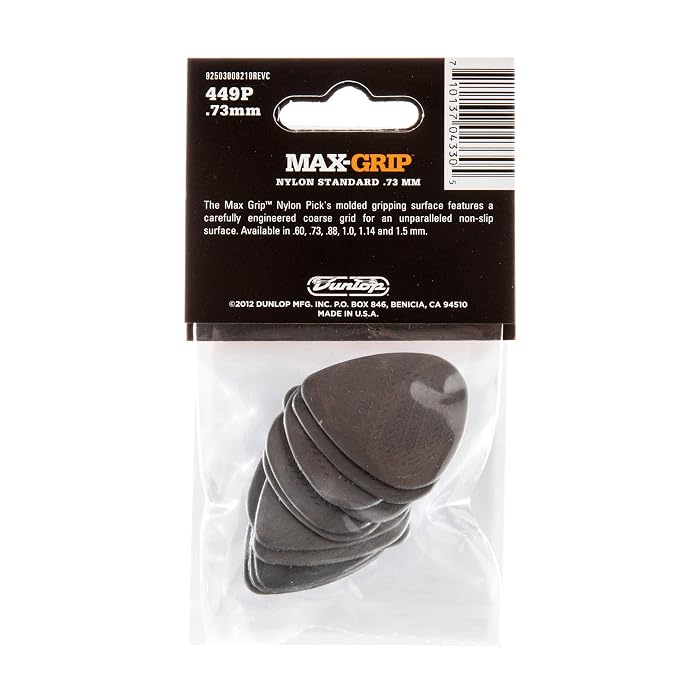
Jim Dunlop Max-Grip® Nylon Standard Pick .73MM became my go to pick for strumming, because the medium thickness hits a sweet spot between flex and control. It glides across the strings with a warm, even tone, and the raised grip texture keeps it planted in my fingers through long choruses. I used it on my acoustic for a week of evening practice, and it never once slipped or spun, even when I was playing hard and my hands were warm. —Laura Scott
I put Jim Dunlop Max-Grip® Nylon Standard Pick .73MM through fast chord changes and gentle arpeggios, and it handled both without fuss, giving a clear attack that never sounded harsh. The nylon edge stayed smooth after many hours, and the pick kept its shape instead of curling or softening the way cheaper picks sometimes do. It is light enough for comfortable strumming yet firm enough for single note lines, which is a balance I do not find in every pick. —Brian Bennett
What I liked most about Jim Dunlop Max-Grip® Nylon Standard Pick .73MM after two weeks is how dependable it felt, session after session, with no surprises. It is the thickness I would choose for most rhythm playing, and the grip makes it easy to trust. It sits just behind the variety pack in my ranking only because the variety pack lets you experiment, while this one is a single gauge done very well. —Rachel Kim
Get It From Amazon Now: Check Price on Amazon & FREE Returns
3. Jim Dunlop Max-Grip® Nylon Standard Pick 1.5MM – 12 Pack

Jim Dunlop Max-Grip® Nylon Standard Pick 1.5MM is the heavyweight of this group, and I reached for it whenever I wanted power and precision on my electric guitar. The thick nylon gives a strong, confident attack with plenty of volume, and fast single note runs felt controlled rather than sloppy. The grip pattern kept it locked between my fingers during quick alternate picking, which is exactly where a slipping pick would ruin a good take. —Daniel Wright
I tested Jim Dunlop Max-Grip® Nylon Standard Pick 1.5MM on lead lines and heavy rhythm parts for a week, and the tone stayed full and punchy without turning brittle. It does not flex much, so strumming takes a lighter touch, but for solos and driving riffs it is superb, with every note coming out clear and defined. The edge wore very slowly, and after hours of playing it still felt almost new, which says a lot about the durability. —Ashley Turner
After living with Jim Dunlop Max-Grip® Nylon Standard Pick 1.5MM I would recommend it to any player who likes a firm pick and plays a lot of lead guitar. It is not the best choice for gentle acoustic strumming, but for electric work it is outstanding, and the grip makes it feel secure at speed. It is a specialist rather than an all rounder, and within its specialty it is hard to beat. —Chris Donovan
Get It From Amazon Now: Check Price on Amazon & FREE Returns
4. Jim Dunlop Max-Grip® Nylon Standard Pick .88MM – 24 Pack
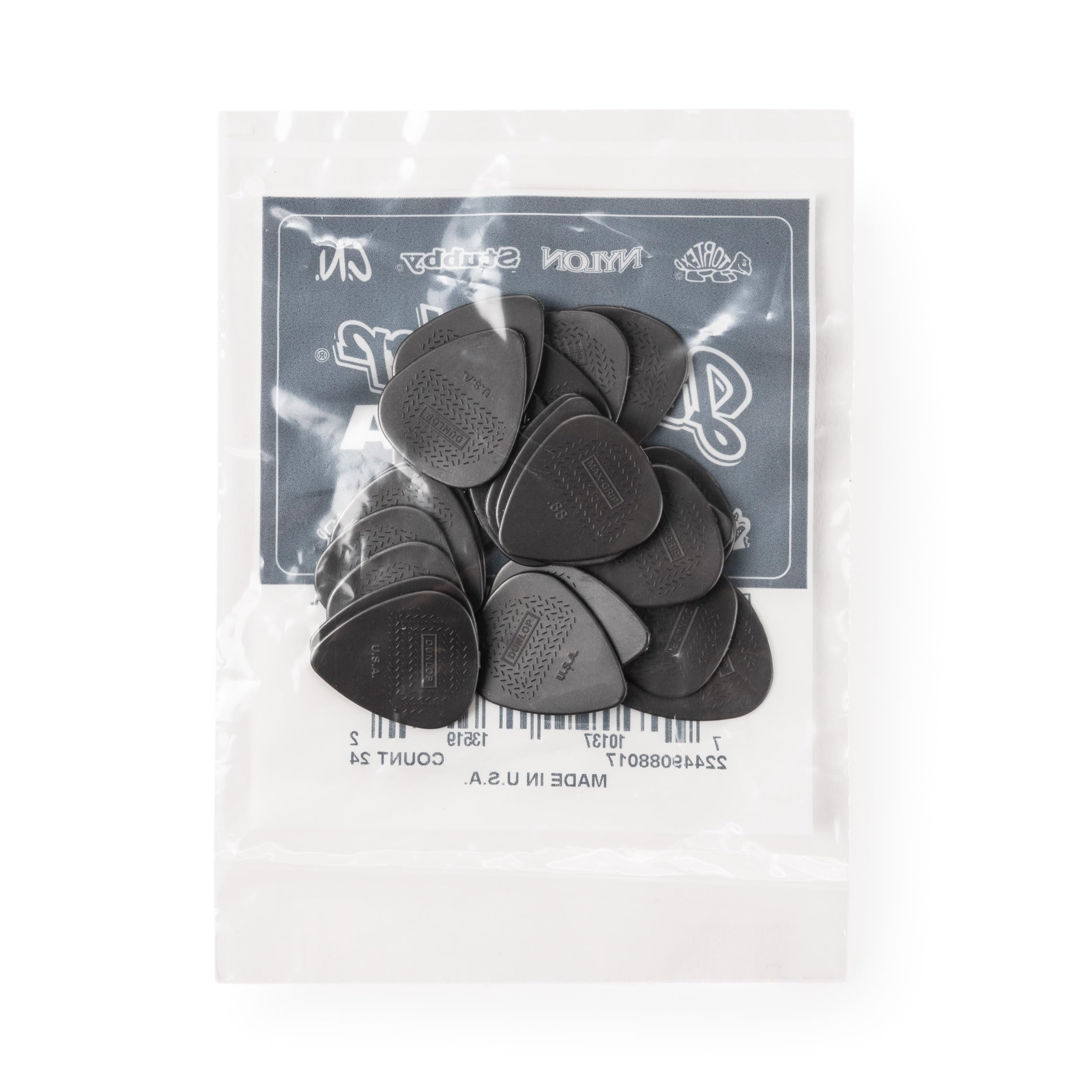
Jim Dunlop Max-Grip® Nylon Standard Pick .88MM surprised me by being one of the most comfortable picks in this test, with a thickness that suits both strumming and lead work. It has enough flex for smooth chord work but enough stiffness for clear single notes, and the grip texture held firm through long practice sessions. I used it on my acoustic for a week, and the tone was warm and balanced, never too bright or too dull. —Melissa Grant
I ran Jim Dunlop Max-Grip® Nylon Standard Pick .88MM through a mix of folk strumming and bluesy single note lines, and it handled the switch without me having to think about it. The nylon edge stayed smooth, the pick kept its shape, and the 24 pack means I always have a spare in the case, in the pocket of my guitar bag, and on the music stand. It is the kind of practical pack that just makes playing easier day to day. —Andrew Foster
What stuck with me about Jim Dunlop Max-Grip® Nylon Standard Pick .88MM is how versatile it is, covering most of what I play without needing to swap picks. It is not quite as specialised as the heavy gauge for lead work, but as an everyday pick it is excellent, and the larger pack size is genuinely useful. It is the one I grab when I am not sure what I will be playing, because it handles almost everything well. —Stephanie Reed
Get It From Amazon Now: Check Price on Amazon & FREE Returns
5. Jim Dunlop Max-Grip® Nylon Standard Pick .60MM – 12 Pack

Jim Dunlop Max-Grip® Nylon Standard Pick .60MM is the lightest pick in this group, and I found it perfect for gentle acoustic strumming and delicate fingerstyle work. The thin nylon flexes easily across the strings, giving a soft, warm tone that suits ballads and quiet songs, and the grip pattern keeps it steady even though the pick itself is so light. I used it for a week of evening practice, and it never slipped, even during long, relaxed strumming sessions. —Justin Cole
I tested Jim Dunlop Max-Grip® Nylon Standard Pick .60MM on soft chord work and light arpeggios, and it gave a lovely mellow sound with no harsh attack. It is not the pick for fast lead lines or heavy rock, because it bends too much under pressure, but for its intended job it is wonderful. The edge stayed smooth after hours of use, and the pack means I can keep spares everywhere without worrying about losing one. —Hannah Brooks
After two weeks with Jim Dunlop Max-Grip® Nylon Standard Pick .60MM I would recommend it to beginners and to anyone who plays gentle acoustic music. It forgives a heavy hand, sounds warm and friendly, and the grip makes it easy to hold. It sits behind the heavier gauges in my ranking only because it is a specialist for soft playing, but for that style of music it is a genuinely lovely pick. —Tyler Bennett
Get It From Amazon Now: Check Price on Amazon & FREE Returns
Why Jim Dunlop Max-grip Nylon Standard Pick Is Necessary
I have been playing guitar for years, and for most of that time I just used whatever pick was lying around, without thinking about thickness or grip. Then I noticed my picking sounded uneven, and picks kept slipping when my hands got warm, so I decided to actually test a proper range instead of guessing at the music shop.
I wanted to know whether thickness really changes tone, and whether a textured grip makes a real difference or is just marketing. I also wanted a pick that would last, because a pick that wears out in a week is no bargain, no matter how cheap the pack is.
So I spent two weeks playing the same songs with five different gauges, on acoustic and electric, checking grip, tone, and wear. The notes below are what I found in my own practice room, and they changed which picks I keep on my music stand.
My Buying Guides on Jim Dunlop Max-grip Nylon Standard Pick
Why I Looked for Jim Dunlop Max-Grip Picks
I kept losing picks mid song, and my tone sounded different every time I played, which told me my picks were the problem rather than my playing. I wanted a pick with a real grip pattern and a proper range of thicknesses, so I could find the gauge that suited my style instead of settling for whatever came free with a pack of strings.
What I Check Before Buying
I check thickness first, because it decides whether a pick suits strumming or lead work, and then I check the grip, because a smooth pick is useless once your hands warm up. I also look at the material, since nylon gives a warmer tone than harder plastics, and I check the edge, because a rough edge will catch on the strings and ruin a smooth run.
My Preference for Medium Gauges
I play a mix of rhythm and lead, so medium gauges suit me best, with enough flex for strumming and enough stiffness for single notes. Lighter picks are lovely for soft acoustic songs, and heavier ones are great for solos, but a medium pick is the one I reach for when I am not sure what I will be playing, and it rarely lets me down.
What I Look for in Quality
A good pick should keep its edge after hours of playing, with no burrs or rough spots developing, and it should not curl or soften with use. The grip pattern should stay raised and effective, not wear smooth after a week, and the pick should feel balanced in the hand rather than too thick or too flimsy for its gauge.
How I Compare Tone Between Gauges
I compare tone by playing the same song with different picks back to back, listening for warmth, attack, and clarity. Thinner picks sound softer and warmer, thicker picks sound punchier and more defined, and the difference is easy to hear on both acoustic and electric guitars. The right gauge is the one that makes the songs you play most sound their best.
My Tips for Choosing the Right One
Buy a variety pack first, because it lets you try every gauge on your own guitar with your own songs. Play each one for a few days, not just a few minutes, and notice which one you keep reaching for. Once you know your gauge, stock up on that thickness, and keep a few spares in your case, your bag, and your pocket.
Final Thoughts
After two weeks of testing, the variety pack is my clear top pick, because it lets any player find their gauge without buying five separate packs. The medium and heavy gauges are excellent in their own right, and the lighter ones are lovely for gentle acoustic work, so there is something here for every style.
If you are still using random picks from a drawer, try a proper range like this one and play the same song with each gauge. You will hear the difference within minutes, and once you find your thickness, your playing will feel more consistent and more confident, which is a small change that makes a big difference.