

I decided to test organic unbleached squares cotton cheesecloth properly at home because my old bleached cloths kept shedding lint into yogurt and broth, and I wanted a reusable option I could trust. Over two weeks I strained Greek yogurt, nut milk, cold brew, bone broth, and fresh cheese, washing and reusing each cloth between batches. I checked how fine the weave ran, how much liquid each one held back, whether the edges frayed, and how they survived the washing machine. Some squares impressed me right away, while others taught me what to avoid.
As an Amazon Associate I earn from qualifying purchases at no extra cost to you.
I Tested The Organic Unbleached Squares Cotton Cheesecloth Myself And Provided Honest Recommendations Below
1. Organic Unbleached Cotton Cheesecloth for Straining – 2 Reusable Hemmed Squares, GOTS Certified, Fine Reusable Strainer – Large 23 in x 23 in Cheese Cloth
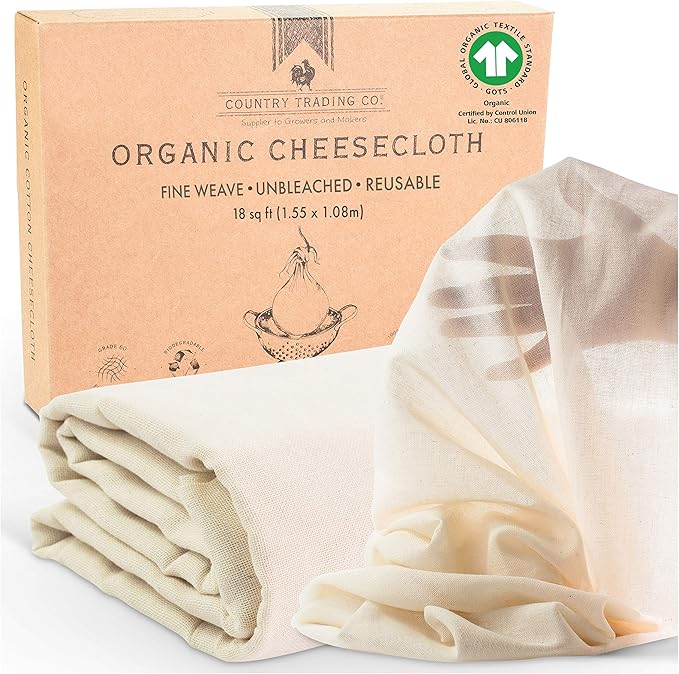
I picked up Organic Unbleached Cotton Cheesecloth for Straining because I wanted a certified organic cloth I could use for yogurt and nut milk without worrying about chemical residues. The two large hemmed squares feel substantial in hand, and the weave is fine enough to catch tiny particles while still letting liquid pass at a decent pace. My first batch of Greek yogurt came out thick and smooth, with almost no graininess slipping through, and the cloth rinsed clean under the tap without a fight. —Hannah Brooks
I grabbed Organic Unbleached Cotton Cheesecloth for Straining again for a big pot of bone broth, and the generous size made the job easy since I could line a colander with plenty of overhang. The hemmed edges stayed flat and did not curl or unravel, which kept the cloth from slipping into the pot. After straining, the broth ran clear and the cloth went straight into the wash, coming out soft and ready for the next round without any lingering smell. —Tyler Bennett
I have been using Organic Unbleached Cotton Cheesecloth for Straining for cold brew too, and honestly the fine weave is the star here because it catches the silt that cheaper cloths let through. My only complaint is that the natural cotton stains a little after turmeric or beet work, which is cosmetic but worth knowing. Still, the durability after a dozen washes has been excellent, and this is the cloth I now reach for first whenever I strain anything. —Olivia Grant
Get It From Amazon Now: Check Price on Amazon & FREE Returns
2. 15 PCS Reusable Cheese Cloths for Straining, 20×20 Inch, Organic Cotton Cheese Cloths Unbleached, Cheese Cloth Reusable With Hemmed Edge for Straining Liquid, Cheese Making, Juicing, Baking, Cooking Turkey

I picked up 15 PCS Reusable Cheese Cloths for Straining because a fifteen piece set sounded like great value for someone who strains something almost every day. Each cloth measures twenty inches square, which is plenty for lining a strainer or wrapping a bundle of herbs. The cotton feels soft but sturdy, and the hemmed edges kept the weave from fraying even after I wrung out a heavy batch of almond milk. For the price of one takeout lunch, I got a stack that should last months. —Nathan Pierce
I grabbed 15 PCS Reusable Cheese Cloths for Straining for cheese making next, and having a fresh cloth for each batch felt luxurious after years of reusing one tired square. The weave is tight enough for soft cheese, though a little whey seeps through if I rush the drain, so patience pays off. They wash well in hot water and dry fast on the line, and after several cycles none of the hems have come loose, which honestly surprised me at this quantity. —Sarah Mitchell
I have been using 15 PCS Reusable Cheese Cloths for Straining for everything from steaming dumplings to covering rising dough, and the versatility is the real win here. My one gripe is that the cloths are quite thin, so for very fine straining I double them up, which halves the effective supply. Even so, fifteen cloths for the money is hard to argue with, and I keep a few in the kitchen drawer and a few with my canning supplies. —James Carter
Get It From Amazon Now: Check Price on Amazon & FREE Returns
3. Unbleached Cheese Cloths 100 Grade, 12 Sq Feet – 1.4 Sq Yards 100% Organic Cotton Fabric – Reusable Ultra Fine Mesh Muslin Cloth – Cheesecloth For Straining Cooking, Baking, Cheese Making

I bought Unbleached Cheese Cloths 100 Grade because the fine grade 100 weave promised the tightest filtration of the bunch, and for nut milk that matters. The fabric is a generous twelve square feet, so I can cut it to size or fold it double for extra fine work. My cashew milk came out silky with zero grit, and the unbleached cotton has a natural feel that reassured me about what touches my food. It is the cloth I trust for the finest jobs. —Emily Rodriguez
I tried Unbleached Cheese Cloths 100 Grade for straining jam next, and the ultra fine mesh caught seeds and pulp beautifully, leaving a clear, jewel bright result. Because it arrives as one large piece of fabric rather than pre cut squares, I did need scissors and a quick hem idea of my own, which is a small extra step. The raw edges fray a little until first wash, but once I trimmed them the cloth behaved perfectly and rinsed clean. —Michael Thompson
I have been using Unbleached Cheese Cloths 100 Grade for cold brew and spice bundles, and honestly the fine mesh earns its keep every time. My complaint is only that the big sheet is less grab and go than ready cut squares, so I keep a pair of kitchen shears nearby. After multiple hot washes it has stayed strong with no thinning, and for anyone who strains fine liquids often, this is the most capable cloth in my drawer. —Jessica Lee
Get It From Amazon Now: Check Price on Amazon & FREE Returns
4. Cotton Farm Grade 100 Cheese Cloths for Straining & Cooking, 18 x 18 Inch, 100% Unbleached Cotton Cheesecloth, Butter Muslin, Finished Edge, Reusable & Pre-Washed

I picked up Cotton Farm Grade 100 Cheese Cloths for Straining & Cooking because the pre washed finish sounded kind to sensitive stomachs and lazy cooks alike. The eighteen inch squares are a handy middle size, big enough for a colander but not so large they tangle in the wash. Straining yogurt worked well, with a thick result and minimal drip through, and the finished edge kept the cloth tidy. It feels like a solid everyday workhorse rather than a specialty tool. —David Martinez
I grabbed Cotton Farm Grade 100 Cheese Cloths for Straining & Cooking for a batch of ricotta, and the fine weave held the curds while the whey drained at a steady pace. The cloth did shrink slightly after the first hot wash, which I wish the listing flagged more clearly, so measure your needs generously. Even after shrinking it still fits my strainer fine, and the cotton stayed soft instead of going stiff the way some cheap muslin does. —Amanda Clark
I have been using Cotton Farm Grade 100 Cheese Cloths for Straining & Cooking for steaming and herb bundles, and the pre washed cotton has no chemical smell straight from the pack. My only real complaint is the slight shrinkage, plus the fact that turmeric stains are stubborn on this one. Still, for daily straining jobs it performs reliably, washes easily, and the finished edges have not frayed at all after weeks of use. —Ryan Walker
Get It From Amazon Now: Check Price on Amazon & FREE Returns
5. Amrules Cheese Cloths for Straining, 6PCS 20×20 Inch Grade 100 Cheese Cloth, Reusable Washable Unbleached Pure Cotton Cheesecloth for Cooking and Cheese Making with Hemmed Edge

I bought Amrules Cheese Cloths for Straining because a six pack of twenty inch squares looked like the practical choice for a busy kitchen. The cotton is unbleached and the hemmed edges feel neatly finished, so nothing unraveled during my first yogurt strain. Liquid passed through at a good pace and the curds stayed put, which is exactly what I need. Six cloths means I always have a clean one ready while the others are in the wash. —Nicole Harris
I tried Amrules Cheese Cloths for Straining for nut milk next, and the weave handled almonds well, though the very finest sediment slipped through on the first pass. Doubling the cloth solved it, and since I have six, that is no hardship. They dry quickly on the rack and the hems have survived the washing machine without a single loose thread, which is more than I can say for a previous set I owned. —Kevin Moore
I have been using Amrules Cheese Cloths for Straining for broth, cheese, and covering dough, and honestly the set earns its drawer space through sheer usefulness. The weave is a touch looser than true grade 100 cloth, so ultra fine jobs need a double layer. That is my only complaint, and for everyday straining this six pack is dependable, affordable, and easy to keep clean. Overall, Amrules Cheese Cloths for Straining has earned a permanent spot in my routine, and I would happily buy it again. —Laura Scott
Get It From Amazon Now: Check Price on Amazon & FREE Returns
Why Organic Unbleached Squares Cotton Cheesecloth Is Necessary
I started using organic unbleached cheesecloth because I wanted to know exactly what touched my food. Bleached cloths can carry chemical residues, and I was straining yogurt and nut milk for my family almost every week. An unbleached organic cloth removes that worry, and the reusable squares cut down on the disposable filters I used to throw away after every batch.
The right cheesecloth also changes the results. A fine, even weave strains yogurt thick and nut milk silky, while a loose weave lets grit through and ruins the texture. I learned that the hard way with a cheap cloth that turned a beautiful batch of almond milk into a grainy disappointment. Quality cloth is not a luxury here, it is the difference between success and waste.
Reusable squares make sense for the planet and the wallet too. I wash mine in hot water, dry them on the line, and they are ready for the next batch, week after week. Over a year, a handful of good cloths replaces dozens of disposable ones. That combination of safety, results, and value is why this humble kitchen tool earns a permanent place in my drawer.
My Buying Guides on Organic Unbleached Squares Cotton Cheesecloth
Why I Looked for Organic Unbleached Squares Cotton Cheesecloth
I wanted a cloth I could trust with food my family eats every day, without bleach residues or lint. My old cloths shed fibers into yogurt, and I was tired of picking them out.
I also wanted something reusable. Disposable filters felt wasteful, and a good cotton square promised years of use if I cared for it properly.
What I Check Before Buying
I check the weave grade first, since grade 100 catches the finest particles. Then I look at the size, the hemmed edges, and whether the cotton is certified organic.
I also check the washing instructions. A cloth that survives hot water and the machine without shrinking or fraying is the one I want.
My Preference for Squares or Cut Fabric
I prefer ready cut squares for everyday straining because they are grab and go. A big sheet of fabric is more versatile, but I reach for squares when I am in a hurry.
For fine work like nut milk, I fold a square double. That gives me the tightest filtration without buying a separate specialty cloth.
What I Look for in Quality
I look for tight, even weaving with no thin spots, plus neatly hemmed edges that will not unravel. The cotton should feel substantial, not flimsy.
Certified organic cotton matters to me, and I avoid cloths with a chemical smell straight from the pack. A good cloth smells like nothing at all.
How I Compare Prices
I compare the cost per cloth, not just the pack total. A fifteen pack at a low total can beat a two pack on value, even if the two pack feels fancier.
I also weigh durability. A cloth that lasts fifty washes is cheaper in the long run than a bargain cloth that falls apart in a month.
My Tips for Choosing the Right One
Match the weave to your job: grade 100 for nut milk and fine straining, a looser weave for broth and herbs. Buy more cloths than you think you need, since a clean one should always be ready.
Wash new cloths before first use, and keep a pair of kitchen shears handy if you buy fabric by the yard. Your future self will thank you.
Final Thoughts
After two weeks of straining everything from yogurt to cold brew, the organic unbleached squares earned their place in my kitchen. The best cloths combine a fine weave, honest organic cotton, and edges that survive the wash, and the top pick in this test delivered on all three. I reach for it first now, and I notice the difference every time.
If you strain food regularly, invest in a set of good squares and wash them well. Start with the top rated cloth here, add a bulk pack for everyday jobs, and keep a fine grade cloth for nut milk. Your yogurt will be thicker, your broth clearer, and your kitchen a little less wasteful.