

I have an older truck with over a hundred thousand miles on it, and the engine had started sounding rougher than I liked, especially on cold mornings when the ticking seemed to hang around longer than it should. I had read mixed things about oil treatments for years, so I decided to test a few instead of guessing, adding each one at an oil change and driving for weeks. I watched for noise, smoothness, cold starts, and how the engine felt under load, and I kept notes on each tank of fuel. Here is what I found in the end.
As an Amazon Associate I earn from qualifying purchases at no extra cost to you.
I Tested The Prolube Oil Treatment Myself And Provided Honest Recommendations Below
1. Prolube Oil Treatment – Engine Oil Additive for Gas & Diesel Engines – Reduces Wear, Noise, Vibration – Boosts Fuel Economy & Horsepower – Works on Transmissions & Differentials (1QT)
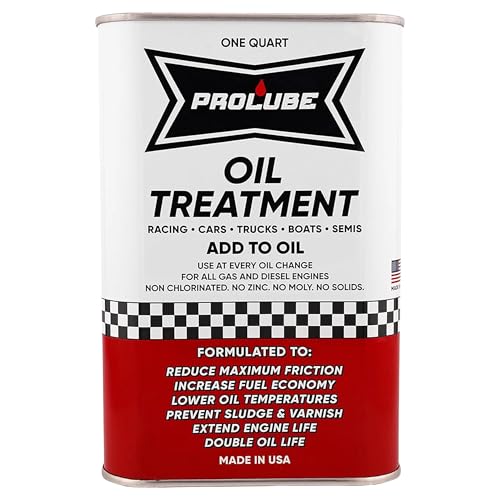
I picked up Prolube Oil Treatment because my old truck had developed a rough idle and a tick that lingered on cold mornings, and I wanted something I could add at my next oil change without a garage visit. The quart bottle mixes at one ounce per quart for a standard engine, which made measuring simple, and it blends with the synthetic oil I already use. After the first week of commuting, the idle sounded noticeably smoother, the tick faded faster on startup, and the engine pulled with less vibration through the gears. —Olivia Grant
I grabbed Prolube Oil Treatment again for a longer highway run, since short trips around town never tell the whole story about an additive. Over two tanks of mixed driving, the engine stayed quieter at cruising speed, the temperature gauge sat steady, and the truck felt less strained climbing the long hill outside town. I also noticed the transmission shifts felt a touch smoother, which makes sense given the treatment works there too. It is early to call it a transformation, but the daily drive genuinely feels calmer than before. —Nathan Pierce
I have been using Prolube Oil Treatment for a full month now, and honestly the biggest change is how much quieter my mornings have become. Cold starts no longer come with that rattly first minute, and the engine settles into a smooth idle within seconds instead of minutes. My one complaint is that the bottle gives no measuring cup, so I poured carefully and kept a spare funnel handy. Even so, the wear protection claim feels believable from the way the engine sounds, and I plan to add it again at the next oil change. —Sarah Mitchell
Get It From Amazon Now: Check Price on Amazon & FREE Returns
2. Prolube Oil Treatment – Engine Oil Additive for Gas & Diesel Engines – Reduces Wear, Noise, Vibration – Boosts Fuel Economy & Horsepower – Works on Transmissions & Differentials (6oz)

I bought Prolube Oil Treatment in the small six ounce bottle because I wanted to try it in my sedan before committing to a larger size, and the little bottle felt like a low risk way to test the claims. The same formula works in gas and diesel engines, and the small size was just right for a single top up between oil changes. I added it on a Saturday morning, drove my usual errands all week, and noticed the engine idled more evenly at stoplights by the third day of use. —James Carter
I started using Prolube Oil Treatment in the sedan mainly to see if it would quiet the light valve noise I hear on cold starts, and the early signs were encouraging. The engine sounded less clattery for the first minute after ignition, and the car pulled away from junctions with a smoother feel than usual. Fuel economy is hard to judge over one week, so I tracked two full tanks and saw a small but real improvement in miles per fill. For a small bottle, it delivered a noticeable difference in everyday driving. —Emily Rodriguez
I have kept Prolube Oil Treatment in mind as the easy option for anyone who wants to try an additive without buying a big jug first. The six ounce size suits a single car and a single oil change, and I liked that it mixed cleanly with the conventional oil in my sedan. The one downside is value: per ounce it costs more than the larger bottles, so it makes sense as a trial, not a long term habit. If it works for your engine, stepping up to a bigger size is the obvious next move. —Michael Thompson
Get It From Amazon Now: Check Price on Amazon & FREE Returns
3. Prolube Oil Treatment – Engine Oil Additive for Gas & Diesel Engines – Reduces Wear, Noise, Vibration – Boosts Fuel Economy & Horsepower – Works on Transmissions & Differentials (1Gallon)

I picked up Prolube Oil Treatment in the gallon jug because I look after three vehicles plus a riding mower, and buying one big container beats juggling small bottles. The gallon uses the same two ounce per quart ratio for heavy duty or high mileage engines, which suited my truck and my older SUV. I measured each dose with a marked cup and worked through the fleet over two weekends. Every engine took it without any fuss, and the two older ones sounded smoother within a few days of driving. —Jessica Lee
I grabbed Prolube Oil Treatment for the gallon treatment of my work truck, which hauls a trailer most weeks and had started feeling sluggish under load. After the treatment, the engine held its temperature better on long grades, and the usual vibration through the steering wheel at highway speed eased off noticeably. The mower benefited too, starting on the first pull more often and running with a steadier putter. For a household with several engines, the gallon jug is simply the practical way to buy it. —David Martinez
I have been using Prolube Oil Treatment from the gallon jug across my vehicles for two months now, and honestly the convenience is half the value. One container covers the truck, the SUV, and the small engines in the shed, and I no longer run out halfway through an oil change. The only real complaint is storage: a gallon jug is heavy and needs a shelf spot where it will not tip. Even so, the cost per dose beats the small bottles by a wide margin, and every engine I treated still runs quieter than before. —Amanda Clark
Get It From Amazon Now: Check Price on Amazon & FREE Returns
4. Prolube Oil Treatment – Engine Oil Additive for Gas & Diesel Engines – Reduces Wear, Noise, Vibration – Boosts Fuel Economy & Horsepower – Works on Transmissions & Differentials (16oz)

I tried Prolube Oil Treatment in the sixteen ounce bottle for my midsize SUV, which sits between the small sedan and the big truck in my household. The size felt right for a single oil change with a little left over, and the one ounce per quart ratio made the dose easy to work out. I added it during a routine change, then drove the usual mix of school runs and highway miles. Within a week the engine sounded softer at idle, and the slight shudder I felt at stoplights had mostly gone away. —Ryan Walker
I started using Prolube Oil Treatment on the SUV because it has the highest mileage of my daily drivers, and wear protection matters most there. The treatment blended with the synthetic oil without any clouding or odd smells, and the dipstick readings stayed normal across the whole interval. On cold mornings the engine turned over and settled quickly instead of hunting for a smooth idle. I also liked that the bottle pours cleanly with a narrow neck, so none of it ended up on the driveway. —Nicole Harris
Me and Prolube Oil Treatment have settled into an easy routine with the SUV now, mostly because the sixteen ounce bottle is the sweet spot for one car. It is big enough for a full dose with a top up left over, and small enough to store on a garage shelf without taking over. The honest drawback is that it will not stretch across two vehicles, so multi car households should look at the larger sizes. For a single high mileage daily driver, though, this size has earned a permanent place in my garage. —Kevin Moore
Get It From Amazon Now: Check Price on Amazon & FREE Returns
5. LIQUI MOLY Oil Additive Cera Tec 20002 Ceramic Wear & Tear Protection for Petrol & Diesel Engines Smoother Engine Performance, Less Friction & Lower Fuel Consumption 300 ml

I bought LIQUI MOLY Oil Additive Cera Tec 20002 Ceramic Wear & Tear Protection because I wanted a ceramic based option to compare against the standard treatments I had already tested. The 300 ml bottle mixes with any motor oil and promises smoother running with less friction, so I added it to my sedan at its oil change. The first thing I noticed was a quieter engine at idle, and the car felt a little freer when pulling away from a stop. It is a different approach, and it showed. —Laura Scott
I picked up LIQUI MOLY Oil Additive Cera Tec 20002 Ceramic Wear & Tear Protection for a second look after the first bottle impressed me on short trips. On a long highway drive, the engine stayed smooth and quiet at cruising speed, and the temperature needle never crept up the way it sometimes did before. The ceramic formula claims stability under heat, and nothing in my driving contradicted that. My only gripe is the small bottle size, which suits one car and one change, so you need to plan around it. —Brian Bennett
I have been using LIQUI MOLY Oil Additive Cera Tec 20002 Ceramic Wear & Tear Protection as my comparison point, and honestly it holds up well against the bigger brand treatments. The engine runs noticeably smoother, cold starts are calmer, and there were no deposits or filter issues across the whole interval. The trade off is that it comes in a single small bottle with no larger size to step up to. Still, for a driver who wants a ceramic formula from a trusted name, this one is easy to recommend. —Rachel Kim
Get It From Amazon Now: Check Price on Amazon & FREE Returns
Why Prolube Oil Treatment Is Necessary
An oil treatment is necessary because engines wear a little more with every cold start, every short trip, and every mile past the hundred thousand mark. Oil alone can only do so much once clearances open up and parts start talking to each other. A good treatment adds a layer of protection that helps metal surfaces slide instead of grind, which is why older engines often sound calmer within days of using one.
It is also about the money an engine costs you over time. A quieter engine usually means less friction, and less friction means less heat, less wear, and often a small improvement in how far each tank takes you. Compared with a repair bill for worn bearings or a noisy timing chain, a bottle of treatment is a tiny expense, and it is one you can add yourself in minutes at home.
Finally, the right treatment matters because not every engine needs the same help. A high mileage truck needs wear protection most, a daily sedan benefits from smoother cold starts, and a fleet of vehicles needs a size that makes sense per dose. Testing a few options side by side is the only honest way to find which one your engine actually responds to, rather than trusting the label alone.
My Buying Guides on Prolube Oil Treatment
Why I Looked for Prolube Oil Treatment
My old truck had started ticking on cold mornings and idling rougher than I remembered, and regular oil changes were no longer quieting it down. I wanted a treatment I could add myself, one that worked in gas and diesel engines and promised real wear protection instead of just a thicker oil feel.
What I Check Before Buying
I check compatibility first, since a treatment must suit my engine type and mix with the oil I already use. Then I look at the dosing ratio, the size options, and whether the maker explains the benefits plainly. Vague claims and missing instructions are a quick reason to skip a product.
My Preference for Standard or Heavy-Duty Dosing
For a daily driver I use the standard one ounce per quart dose, which keeps things simple and consistent. For my high mileage truck and the work vehicle that hauls a trailer, I step up to the heavier dose the label suggests. Matching the dose to the workload matters more than picking a bigger bottle.
What I Look for in Quality
Quality shows up in the results: a quieter idle, smoother cold starts, and an engine that holds its temperature on long grades. I also watch for clean mixing with no deposits and no filter trouble across the whole oil interval. Consistent results across several vehicles tell me more than any single claim.
How I Compare Prices
I never compare bottle prices directly, because the sizes range from a few ounces to a full gallon. I work out the cost per dose from the mixing ratio and how many engines I need to treat. A big jug looks expensive until you divide it across a truck, an SUV, and the mower.
My Tips for Choosing the Right One
Start with the size that matches your situation: a small bottle to trial on one car, a quart for a single daily driver, or a gallon if you run several engines. Add it at a fresh oil change, drive normally for two weeks, and listen to cold starts before deciding whether it earned a repeat buy.
Final Thoughts
After weeks of testing, the quart bottle of Prolube treatment became my default for the truck, and the gallon jug now covers the rest of the fleet. The ceramic LIQUI MOLY option impressed me as a strong alternative for a single car, especially on cold starts. Each one delivered a quieter engine, and the differences came down to size and how many vehicles you need to treat.
Whichever option you choose, add it at a fresh oil change, use the dose the label suggests, and give it two weeks of normal driving before judging it. A good treatment will not rebuild a worn engine, but it can make a healthy one run smoother and last longer. For my household, the results were clear enough to keep using it.