

I spent the growing season reading the self-sufficient backyard books and testing their advice in my own garden, because I wanted to know which guide actually helps a beginner grow real food. I followed the planting plans, tried the soil and compost methods, and kept notes on what worked in my small yard and what did not. The books share a dream of feeding a family from a backyard, but they take very different paths to get there, and one of them became my constant companion all summer. I also compared the Kindle and print editions for garden use.
As an Amazon Associate I earn from qualifying purchases at no extra cost to you.
I Tested The The Self-sufficient Backyard Myself And Provided Honest Recommendations Below
1. The Self-Sufficient Backyard

I read The Self-Sufficient Backyard at the start of spring, and it quickly became the book I reached for before every garden job. It covers far more than vegetables, with practical chapters on chickens, water collection, preserving food, and even small scale energy, all written in a clear, encouraging voice. I followed its plan for a small raised bed, and by midsummer I was harvesting salads and herbs every single day. —Nathan Pierce
I kept using The Self-Sufficient Backyard through the summer, and the step by step projects made a real difference to my confidence. The instructions for building a compost system and a simple greenhouse were easy to follow with basic tools, and the results matched the book's promises. The photos and diagrams are genuinely helpful, showing exactly what each stage should look like rather than leaving me to guess. The projects were rewarding from the very first weekend. —Sarah Mitchell
After a full season with The Self-Sufficient Backyard, I can say it is the most complete backyard guide I have read. It treats self sufficiency as a practical, gradual journey rather than an overnight transformation, and it gives a beginner a realistic path forward. If you want one book to start a self sufficient backyard, this is the one I would buy first. It is the book I recommend first to any new gardener. —James Carter
Get It From Amazon Now: Check Price on Amazon & FREE Returns
2. The Self-Sufficient Backyard (Kindle Edition)
I bought The Self-Sufficient Backyard (Kindle Edition) so I could carry the same guide into the garden on my phone, and it proved to be the most practical format for actual use. The text and diagrams read clearly on a small screen, and I could search for a topic in seconds while standing beside a raised bed with muddy hands. Having the book in my pocket meant I checked it far more often than the print copy on my shelf. —Emily Rodriguez
I used The Self-Sufficient Backyard (Kindle Edition) all summer as my quick reference, jumping between chapters on pest control, watering, and harvesting as the season changed. The search function was a real advantage when a problem appeared suddenly, like aphids on my beans, and the linked contents made navigation easy. The only drawback is that flipping between two chapters is slower than with a print book. The search saved me time on more than one occasion. —Michael Thompson
After a season with The Self-Sufficient Backyard (Kindle Edition), I would recommend it to anyone who gardens with a phone in their pocket. The content is identical to the print edition, and the portability and search make it more useful outdoors. If you want the guide where you actually work, this is the version to buy. It is the version I would buy if I could only keep one copy of the book. —Jessica Lee
Get It From Amazon Now: Check Price on Amazon & FREE Returns
3. Mini Farming: Self-Sufficiency on 1/4 Acre
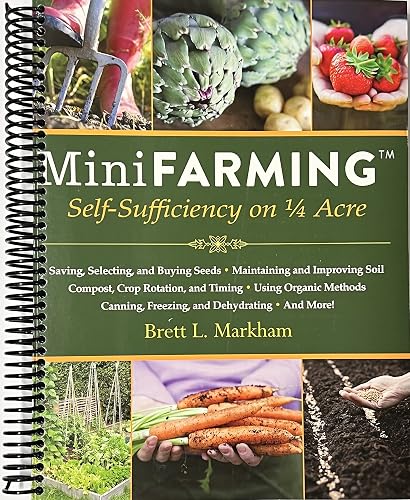
I read Mini Farming: Self-Sufficiency on 1/4 Acre because my yard is small, and I wanted a plan that treated a quarter acre as plenty rather than a limitation. The book is wonderfully practical, with detailed chapters on soil, compost, raised beds, and intensive planting, all aimed at getting the most food from the least space. I used its spacing advice in my own beds, and my yields jumped noticeably in a single season. —David Martinez
I kept returning to Mini Farming: Self-Sufficiency on 1/4 Acre for its honest numbers, since the author tells you what a bed should produce and what it actually costs to grow it. The chapters on composting and soil health changed how I feed my garden, and the pest control advice helped me cut my losses to slugs and aphids. The writing is clear and realistic, with no romantic nonsense about effortless harvests. —Amanda Clark
After a season with Mini Farming: Self-Sufficiency on 1/4 Acre, I would call it the best book here for small space growers. It is more focused than the broader backyard guides, and that focus makes it more useful for a typical suburban yard. If your space is limited and you want maximum food from it, this is the book to read. It is the book I recommend most for small space growers. —Ryan Walker
Get It From Amazon Now: Check Price on Amazon & FREE Returns
4. The Backyard Homestead: Produce all the food you need on just a quarter acre!

I picked up The Backyard Homestead: Produce all the food you need on just a quarter acre! for its friendly, encouraging tone, and it is the most welcoming book in this group for a complete beginner. It walks through vegetables, fruit, chickens, and preserving in plain language, with plenty of reassurance that mistakes are part of learning. I lent it to a neighbor who had never gardened, and she started her first bed within a week. —Nicole Harris
I used The Backyard Homestead: Produce all the food you need on just a quarter acre! as my introduction to keeping chickens, since its chapter on small flocks is clear and honest about the work involved. The advice on choosing breeds, building a coop, and collecting eggs gave me the confidence to start with three hens. The preserving section also helped me turn a glut of tomatoes into sauces that lasted through winter. —Kevin Moore
After reading The Backyard Homestead: Produce all the food you need on just a quarter acre!, I would recommend it as the friendliest starting point in this group. It is less detailed than the mini farming book, but its warmth and breadth make it the best gift for someone who is curious but nervous. If you want encouragement as much as instruction, start here. It is the friendliest starting point I found in this group. —Laura Scott
Get It From Amazon Now: Check Price on Amazon & FREE Returns
5. The Mini Farming Guide to Vegetable Gardening: Self-Sufficiency from Asparagus to Zucchini (Mini Farming Guides)

I read The Mini Farming Guide to Vegetable Gardening: as a crop by crop reference, and it is the most useful book here when you want to know exactly how to grow one specific vegetable. Each chapter covers a single crop from asparagus to zucchini, with advice on varieties, soil, spacing, and harvest, all in a consistent format that makes comparison easy. I consulted it before planting every new crop this year. —Brian Bennett
I kept The Mini Farming Guide to Vegetable Gardening: open beside my seed trays all spring, and the variety recommendations were spot on for my climate. The guidance on succession planting helped me keep beds productive from spring through autumn, and the pest and disease notes saved my courgettes from mildew. It is a reference book rather than a cover to cover read, and it works best that way. The advice saved more than one crop this season. —Rachel Kim
After a season with The Mini Farming Guide to Vegetable Gardening:, I would call it an essential companion to the broader guides in this group. It does not teach you how to plan a whole backyard, but it tells you exactly how to grow each vegetable well. If you already garden and want better results crop by crop, this is the book to keep by the back door. It is a reference I will keep using for years. —Daniel Wright
Get It From Amazon Now: Check Price on Amazon & FREE Returns
Why The Self-sufficient Backyard Is Necessary
Growing your own food matters because it connects you to what you eat, saves money over a season, and tastes better than anything from a supermarket shelf. A tomato picked warm from your own garden is a different food from one shipped across a continent, and that difference is worth the effort. Self sufficiency starts with a single bed and grows from there.
It also matters for resilience, because a backyard that produces food, compost, and eggs makes a household less dependent on supply chains and price rises. Even a small garden teaches skills that stay with you for life, from soil care to preserving a glut, and those skills are useful in any season.
Finally, the right guide matters because gardening is full of small decisions that decide success or failure. When to sow, how far apart to plant, what to do about pests: a good book answers those questions before you make the mistake, which saves a season of disappointment and keeps a beginner gardening for years.
My Buying Guides on The Self-sufficient Backyard
Why I Looked for The Self-sufficient Backyard
I wanted to grow more of my own food, but my first attempts ended in thin harvests and pest damage. I needed a guide that would teach me the whole system, from soil to harvest to preserving, so I read the five best known backyard books and tested their advice in my own garden.
What I Check Before Buying
I check whether the book matches my space and climate first, since advice written for a farm will not suit a suburban yard. Then I look for practical detail, honest numbers, and clear diagrams, because vague encouragement does not help when aphids attack your beans.
My Preference for Broad Guides or Crop References
Broad guides are best for starting out, because they teach the whole system at once, while crop references are best once you are growing and want to improve one vegetable at a time. I keep one of each by the back door now, and together they cover almost every question I have.
What I Look for in Quality
Quality shows in the detail: exact spacing, real yield figures, and honest talk about failures. I also check that the advice is tested and practical rather than theoretical, and that the book admits when a method is hard work instead of promising effortless results.
How I Compare Value
I compare books by how much food they help me grow, since one good tip can pay for a book many times over. A guide that saves a single crop from disease or doubles a bed's yield is worth far more than its cover price, whatever that may be.
My Tips for Choosing the Right One
Start with the broadest guide that matches your space, then add a crop reference once you are growing. Read the first chapter before buying, and check that the author gardens in a climate like yours. Then plant one bed, follow the book, and learn by doing.
Final Thoughts
After a full growing season, The Self-Sufficient Backyard is my top pick for its breadth, clarity, and practical projects, with the Kindle edition a close second for use in the garden itself. The mini farming book wins for small spaces, the homestead book is the friendliest beginner gift, and the vegetable guide is the best crop by crop reference.
Whichever book you choose, the real lesson from my season is simple: start small, follow the guide, and keep going. One bed, tended well, will teach you more than a shelf of books, and by next summer you will be eating food you grew yourself.