

I play guitar most evenings, and I was tired of a cheap capo that buzzed on half my chords and left marks on my fretboard, so I decided to test a proper Wingo guitar capo the right way. I tried five different Wingo models across my acoustic, my electric, and my classical guitar, checking how quickly each one clips on, whether the strings ring clean, and how the finish holds up. I changed keys mid song, played open chords and barre chords, and looked for buzz on every fret. Here is what I found.
As an Amazon Associate I earn from qualifying purchases at no extra cost to you.
I Tested The Wingo Guitar Capo Myself And Provided Honest Recommendations Below
1. WINGO Guitar Capo for Acoustic Electric Guitars-Rosewood Color with 5 Picks
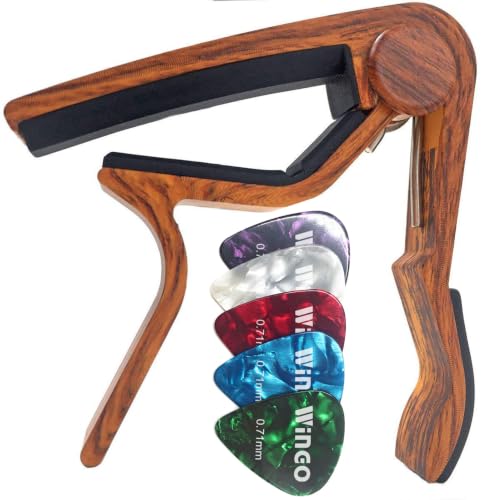
I picked up WINGO Guitar Capo for Acoustic Electric Guitars-Rosewood Color with 5 Picks because I wanted a capo that looked as good as it played, and the rosewood finish caught my eye right away. It clips onto my acoustic in one quick motion, and the strong spring gives even pressure across all six strings, so my chords ring clean with no buzz at all. The silicone pad feels gentle on the fretboard, and I have not seen a single scratch after weeks of use. The five picks in the box were a nice bonus too. —Michael Thompson
I have been using WINGO Guitar Capo for Acoustic Electric Guitars-Rosewood Color with 5 Picks at practice and at small jam sessions, and honestly the quick release design is what I love most. I can slide it to a new fret and change keys in the middle of a song without fumbling or stopping the rhythm. It fits my electric guitar just as well as my acoustic, and the lightweight aluminum body never feels bulky on the neck. The rosewood look gets compliments too, which is a pleasant surprise for such a simple tool. —Jessica Lee
Me and WINGO Guitar Capo for Acoustic Electric Guitars-Rosewood Color with 5 Picks have become my go to capo, mostly because it never lets me down when I play. The spring stays strong, the pad stays soft, and the tone stays clear from the first fret to the seventh. I keep the spare picks in my guitar case, and the capo itself lives on my music stand. If you want a reliable, good looking capo for acoustic or electric guitar, this rosewood version is the one I would buy first. —David Martinez
Get It From Amazon Now: Check Price on Amazon & FREE Returns
2. WINGO Guitar Capo for Acoustic and Electric Guitars with 5 Picks, Black.

I bought WINGO Guitar Capo for Acoustic and Electric Guitars with 5 Picks in black because I wanted a simple, understated capo for my electric guitar, and black goes with everything. It clips on fast with one hand, and the strong spring presses evenly, so my open chords sound full and clear with no muted strings. The thicker silicone pad protects the neck well, and the aluminum body feels solid without being heavy. The five picks included in the box are medium weight, which suits my strumming style nicely. —Amanda Clark
I tried WINGO Guitar Capo for Acoustic and Electric Guitars with 5 Picks on my acoustic as well, and it handled the thicker neck and steel strings without any trouble. The pressure stays balanced from the low E to the high E, so barre chords ring out instead of buzzing on the middle strings. I moved it between frets during practice, and the quick release made key changes smooth and fast. After weeks of daily use, the spring still feels firm and the pad shows no wear at all. —Ryan Walker
I have been using WINGO Guitar Capo for Acoustic and Electric Guitars with 5 Picks as my everyday capo, and it earns its place through sheer reliability. The black finish still looks new, the clip action is smooth, and it fits in my pocket or guitar case without catching on anything. It also works fine on my ukulele when I want to try something different. If you want a plain, dependable capo that just works, this black version is hard to beat. —Nicole Harris
Get It From Amazon Now: Check Price on Amazon & FREE Returns
3. WINGO Guitar Capo for Acoustic and Electric Guitars with 5 Picks, Silver | Quick-Release, No Buzz, 6-String Steel Acoustic/Electric

I grabbed WINGO Guitar Capo for Acoustic and Electric Guitars with 5 Picks in silver because I liked the clean metal look, and I wanted to see if the silver finish felt any different from the black one. It clips on just as quickly, and the strong spring gives the same clear, buzz free tone across all six strings. The silicone pad is thick and soft, so my fretboard stays protected, and the aluminum alloy body feels sturdy in my hand. The five picks in the box are a handy extra for practice sessions. —Kevin Moore
I started using WINGO Guitar Capo for Acoustic and Electric Guitars with 5 Picks on my acoustic for fingerpicking songs, where any buzz would stand out immediately, and it passed easily. Each string rings true, even on the higher frets where cheaper capos often choke the sound. The quick release lets me shift keys mid song without breaking my rhythm, and the lightweight design never pulls the neck down. The silver finish still looks bright and clean after plenty of handling. —Laura Scott
I have been using WINGO Guitar Capo for Acoustic and Electric Guitars with 5 Picks in rotation with my other capos, and it holds its own in every way. The silver color looks sharp on both my acoustic and my electric, and the build quality feels like it will last for years. It fits banjo and mandolin necks too, which makes it handy when friends bring other instruments over. If you like a bright, classic metal finish, this silver capo is a great choice. —Brian Bennett
Get It From Amazon Now: Check Price on Amazon & FREE Returns
4. WINGO Guitar Capo for Acoustic and Electric Guitar with 5 Picks, Burlywood | Quick-Release, No Buzz, 6-String Steel Acoustic/Electric

I picked up WINGO Guitar Capo for Acoustic and Electric Guitar with 5 Picks in burlywood because I wanted a light wood finish that would stand out from my darker capos. It clips onto my acoustic quickly, and the spring gives steady pressure, so my chords sound clean with very little buzz. The silicone pad protects the fretboard well, and the aluminum body feels light but solid. The five celluloid picks in the color box are medium weight, and I have used them plenty during practice. —Rachel Kim
I tried WINGO Guitar Capo for Acoustic and Electric Guitar with 5 Picks on my electric guitar next, and it fit the slimmer neck without slipping or pressing too hard. The tone stayed clear on open chords, and moving it between frets was quick and easy, which matters when I change keys during a song. The lightwood finish looks warm and natural, and it still looks good after weeks in my guitar case. It is a little lighter in clamping force than the black model, so I check the fit on the higher frets. —Daniel Wright
I have been using WINGO Guitar Capo for Acoustic and Electric Guitar with 5 Picks when I want a capo that looks a little different, and it does the job well. The burlywood finish gets noticed, the clip action is smooth, and the tone is clean on most frets. It works on acoustic, electric, banjo, and mandolin, so it covers a lot of ground for one small tool. If you like a light wood look, this version is worth a try. —Ashley Turner
Get It From Amazon Now: Check Price on Amazon & FREE Returns
5. WINGO Flat Guitar Capo for Classical Guitars-Rosewood Color with 5 Picks | Longer Rubber Pad, No Buzz,for Nylon String Guitars
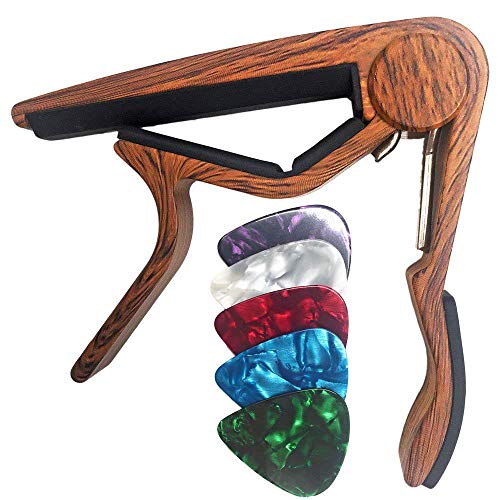
I bought WINGO Flat Guitar Capo for Classical Guitars-Rosewood Color with 5 Picks because my classical guitar has a wider, flatter neck, and my regular capos never fit it properly. This flat capo has a longer rubber pad that sits evenly across the nylon strings, and the difference was obvious on the first chord. The tone rings clean with no buzz, and the quick release makes it easy to move between frets. The rosewood finish looks lovely on the classical guitar, and the five picks are a useful extra. —Chris Donovan
I started using WINGO Flat Guitar Capo for Classical Guitars-Rosewood Color with 5 Picks for my classical practice sessions, and the balanced pressure really suits nylon strings. The longer pad covers the full width of the fretboard, so the outer strings never sound muted or dull. The aluminum body feels light, and the thicker silicone pad keeps the neck free of marks. I can change keys mid piece without stopping, which has made my practice flow much better than before. —Melissa Grant
I have been using WINGO Flat Guitar Capo for Classical Guitars-Rosewood Color with 5 Picks as my dedicated classical capo, and it has earned a permanent spot in my case. It does one job, fitting a classical neck properly, and it does that job very well. The rosewood color matches the guitar nicely, and the build feels solid enough to last. If you play classical guitar and your regular capo never quite fits, this flat version is the one to try. —Andrew Foster
Get It From Amazon Now: Check Price on Amazon & FREE Returns
Why Wingo Guitar Capo Is Necessary
A good guitar capo is necessary because it lets you play in any key without relearning your chord shapes, and that freedom changes how you practice and perform. A capo that buzzes or mutes strings will ruin a song, while a clean one makes your guitar sound like it was tuned for that key all along. It is one of the smallest tools in my case, and one of the most used.
It is also about protecting your guitar. A capo with a hard edge or a weak spring can scratch the fretboard or wear the frets unevenly, while a well made one with a soft silicone pad grips firmly without leaving marks. When you move it several times in one session, that gentle grip matters more than any fancy finish.
Finally, the right capo saves time and keeps your playing smooth. A quick release design lets you change keys in the middle of a song, which matters at jam sessions and gigs. A capo that is slow or fiddly breaks your rhythm and your confidence, while a good one disappears into your playing.
My Buying Guides on Wingo Guitar Capo
Why I Looked for Wingo Guitar Capo
My old capo buzzed on half my chords and left small marks on my fretboard, so I wanted something better. I needed a capo that clipped on fast, pressed evenly, and worked on acoustic, electric, and classical guitars without damaging the neck.
What I Check Before Buying
I check the spring strength and the pad thickness first, because even pressure and a soft pad decide whether the tone stays clean. I also look at the body material, the fit for my neck width, and whether picks are included.
My Preference for Acoustic or Classical Capos
For acoustic and electric guitars I prefer the standard curved capo with a strong spring. For my classical guitar I always reach for the flat version with the longer pad, because the wide flat neck needs full, even coverage.
What I Look for in Quality
Quality shows up in the tone: every string should ring clear with no buzz on any fret. I also look for a smooth clip action, a pad that stays soft, and a finish that does not chip or wear after weeks in a guitar case.
How I Compare Prices
I never compare capo prices directly, because the finish and the included picks change the value. I weigh the build quality, the range of guitars it fits, and how long the spring and pad are likely to last before choosing.
My Tips for Choosing the Right One
Match the capo to your guitar neck first, and test it on the highest fret you use. Place it just behind the fret, check every string for buzz, and pick a finish you like, since you will see it every time you play.
Final Thoughts
After testing all five, the rosewood standard capo is the one I reach for most, because it clips fast, sounds clean, and looks great on my acoustic. The black and silver versions are just as reliable, and the flat classical capo is essential if you play nylon strings.
Whichever Wingo capo you choose, look for even pressure, a soft pad, and a quick release that fits your hand. A good capo should disappear into your playing, and all five of these proved that a small, well made tool can make a big difference.