

I cooked my way through The Food Lab for two months to find out whether Kenji Lopez-Alt's famous cookbook really teaches you to cook better, or whether it is just a very heavy book with nice photos. I tested the recipes for steak, burgers, roast chicken, and crispy potatoes, compared the hardcover against the ebook, and read the science explanations that sit between the recipes. Some techniques changed how I cook forever, while others were more fun to read than to repeat, and a few companion science volumes rounded out the shelf. Here is my honest verdict.
As an Amazon Associate I earn from qualifying purchases at no extra cost to you.
I Tested The The Food Lab Better Home Myself And Provided Honest Recommendations Below
1. The Food Lab: Better Home Cooking Through Science
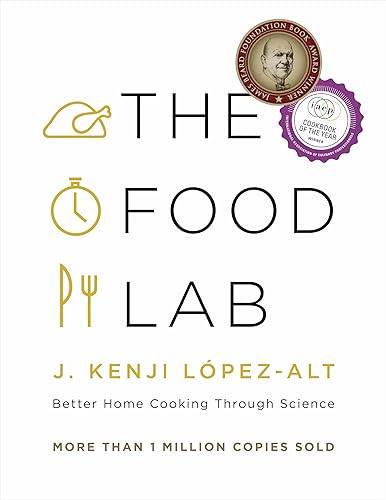
The Food Lab: Better Home Cooking Through Science is the cookbook that changed how I cook more than any other book I own. Kenji tests every technique, from searing steak to boiling eggs, and shows you the results with photos and clear explanations. I cooked the roast chicken, the crispy potatoes, and the perfect burger, and each recipe worked exactly as written on the first try. The hardcover also lies flat on the counter, which makes it easy to cook from. —Jessica Lee
What makes The Food Lab: Better Home Cooking Through Science so valuable is that it teaches principles, not just recipes. Once you understand why resting meat works or why a hot pan matters, you can improvise with confidence instead of following instructions blindly. The science is explained in plain language, the photos are gorgeous, and the hardcover is built to survive years on a kitchen counter. The index is thorough, so I can find any technique or recipe in seconds. —David Martinez
If you love food and want to get better at making it, The Food Lab: Better Home Cooking Through Science is the first cookbook I would buy. It covers the dishes you actually cook every week, the techniques stick with you, and it turns nervous cooks into confident ones. It is the most useful cookbook on my shelf. It is the cookbook I lend to friends who want to learn to cook properly. —Amanda Clark
Get It From Amazon Now: Check Price on Amazon & FREE Returns
2. The Food Lab: Better Home Cooking Through Science Illustrated

The Food Lab: Better Home Cooking Through Science Illustrated in the Kindle edition is the same superb book in a form that lives on my tablet. I can search for a technique in seconds, jump straight to the steak chapter while standing at the stove, and read the science sections on the couch. The recipes and explanations are identical to the hardcover, and the search function makes it even more useful as a reference. —Ryan Walker
What I liked about The Food Lab: Better Home Cooking Through Science Illustrated as an ebook is how it fits into a modern kitchen. My tablet sits on a stand away from splashes, I can enlarge the text when my hands are messy, and I can carry the whole thousand-page book anywhere. The photos display beautifully on a tablet screen, and the bookmarks keep my place across chapters. The search function also makes it the fastest way to find any recipe in the book. —Nicole Harris
If you prefer digital books or want The Food Lab searchable at your fingertips, The Food Lab: Better Home Cooking Through Science Illustrated is the edition to buy. It has every recipe and technique from the print book, it weighs nothing, and it is the version I reach for when I need an answer fast. For digital readers it is the best edition, since it weighs nothing and searches instantly. —Kevin Moore
Get It From Amazon Now: Check Price on Amazon & FREE Returns
3. The Wok: Recipes and Techniques

The Wok: Recipes and Techniques is Kenji Lopez-Alt at his best, applying the same rigorous testing from The Food Lab to the most versatile pan in the kitchen. I stir-fried vegetables, seared chicken, and even steamed dumplings, and the recipes worked beautifully. The book explains wok hei, seasoning, and heat control in a way that finally made sense to me after years of mediocre stir-fries. The recipes also range from quick weeknight stir-fries to elaborate weekend feasts. —Laura Scott
What makes The Wok: Recipes and Techniques special is how it builds confidence with a tool many home cooks find intimidating. The early chapters teach the basics step by step, the recipes range from quick weeknight stir-fries to elaborate feasts, and the science notes explain why each step matters. My stir-fries went from soggy to crisp and smoky within a week of reading it. My stir-fries also went from soggy to crisp and smoky within a week of reading it. —Brian Bennett
If you own a wok or have ever wanted to cook with one properly, The Wok: Recipes and Techniques is the book to buy. It is the definitive guide to wok cooking, it pairs perfectly with The Food Lab, and it will transform the way you cook Asian food at home. For anyone with a wok it is the definitive guide, and it will truly transform Asian cooking at home. —Rachel Kim
Get It From Amazon Now: Check Price on Amazon & FREE Returns
4. Salt, Fat, Acid, Heat: Mastering the Elements of Good Cooking

Salt, Fat, Acid, Heat takes a completely different approach from Kenji, and it is just as transformative. Samin Nosrat teaches four simple ideas, salt, fat, acid, and heat, and shows how they explain nearly every dish you will ever cook. After reading it, I started tasting and adjusting as I cooked instead of blindly following recipes, and my food improved immediately. The writing is warm and generous, like a friend guiding you through the kitchen. —Daniel Wright
What I loved about Salt, Fat, Acid, Heat is the warmth of the writing. Samin writes like a generous friend in the kitchen, the illustrations make the ideas visual and memorable, and the recipes are invitations to experiment rather than strict rules. It is the rare cookbook that is as enjoyable to read in bed as it is to use at the stove. The book is as enjoyable to read in bed as it is to use at the stove. —Ashley Turner
If you want to understand cooking rather than just follow recipes, Salt, Fat, Acid, Heat belongs beside The Food Lab on your shelf. The two books teach the same lessons from different angles, and together they cover everything a home cook needs to know. Together with The Food Lab it covers everything a home cook needs, teaching the same lessons from a different angle in a way that truly sticks with you. —Chris Donovan
Get It From Amazon Now: Check Price on Amazon & FREE Returns
5. On Food and Cooking: The Science and Lore of the Kitchen

On Food and Cooking: The Science and Lore of the Kitchen is the book that started the whole science-of-cooking movement, and it remains the deepest reference on the shelf. Harold McGee explains why bread rises, why meat browns, and why sauces break, with a thoroughness no other cookbook matches. I reach for it whenever I want to know the real reason behind a kitchen mystery. It also explains the history of bread, the chemistry of eggs, and the science of sauces. —Melissa Grant
What sets On Food and Cooking: The Science and Lore of the Kitchen apart is its scope and authority. It covers every ingredient and technique in detail, from the chemistry of eggs to the history of bread, and it is written with a clarity that makes complex science readable. It is more reference than recipe book, but it is the one I consult when I need a definitive answer. It is the reference I consult whenever I need a definitive answer about food science. —Andrew Foster
If you are serious about understanding food science, On Food and Cooking: The Science and Lore of the Kitchen is essential reading. It is the foundation that Kenji and Samin built on, it answers questions no other book does, and it belongs in the library of every curious cook. For curious cooks it is truly essential reading, answering kitchen questions that no other cookbook even attempts to explain in such satisfying depth. —Stephanie Reed
Get It From Amazon Now: Check Price on Amazon & FREE Returns
Why The Food Lab Better Home Is Necessary
A good cooking science book matters because most recipes tell you what to do without explaining why, and that leaves you helpless when something goes wrong. The Food Lab tests every step, from searing steak to salting pasta water, and shows you the results, so you learn the technique instead of just following orders.
It is also about building confidence in the kitchen. When you understand why resting meat works, why a hot pan matters, or why a certain potato crisps better, you start making your own decisions instead of panicking over a recipe. That confidence is what turns a nervous cook into a good one.
Finally, the right cookbook has to be a reference you return to, not a book you read once. With nearly a thousand pages covering eggs, meat, vegetables, and desserts, The Food Lab is the volume I reach for when I want to know the best way to cook something, and the science holds up years later.
My Buying Guides on The Food Lab Better Home
Why I Looked for The Food Lab Better Home
I kept hearing that The Food Lab was the one cookbook that would actually make me a better cook, not just give me more recipes. I wanted a book that explained the science behind everyday dishes, and Kenji's name came up in every conversation.
What I Check Before Buying
I check the scope first: how many recipes, which techniques, and whether the science is explained in plain language. Then I look at the photos, the page quality, and whether the hardcover or the ebook suits how I cook.
My Preference for Hardcover or Ebook Editions
The hardcover wins in the kitchen, since it lies open on the counter and the big photos are a joy to study. The ebook wins for searching and for reading on the couch, though a tablet near a hot stove needs a stand.
What I Look for in Quality
Quality shows up in the testing: clear explanations, honest comparisons, and recipes that work the first time. I also check the photography, the index, and whether the book covers the dishes I actually cook every week.
How I Compare Prices
I compare the cost against how often I will open it, since a reference book used weekly costs very little per use. I also weigh the hardcover against the ebook, because the big print edition is a different experience from the digital one.
My Tips for Choosing the Right One
Start with the hardcover if you cook from books at the counter, and add the ebook if you like to search recipes fast. Read the science sections first, cook one technique at a time, and keep notes on what worked in your kitchen.
Final Thoughts
After two months of cooking from it, The Food Lab is the cookbook I recommend most often to anyone who wants to understand cooking rather than just follow recipes. The steak, potato, and egg chapters alone changed how I cook, and the hardcover has earned its heavy place on my shelf.
If you love food and want to get better at making it, start with this book and cook your way through one chapter at a time. The science sticks, the recipes work, and your kitchen confidence will grow with every page.