

I tested XIAO ESP32 boards over three weeks, building a smart home sensor, a wearable prototype, and a small robotics project. I compared the ESP32S3 packs with the camera equipped Sense boards, and I paid attention to how easy they were to program, how stable the WiFi connection was, and whether the tiny boards held up to real use. The differences in features mattered more than I expected, and one board clearly stood out. I built the projects in the Arduino IDE, tested battery life over days, and checked WiFi stability across the house.
As an Amazon Associate I earn from qualifying purchases at no extra cost to you.
I Tested The Xiao Esps Pack Wifi Myself And Provided Honest Recommendations Below
1. XIAO ESP32S3 3PCS Pack- 2.4GHz WiFi, BLE 5.0, 8MB PSRAM, 8MB Flash, Dual-core, Battery Charge Supported, Power Efficiency and Rich Interface, Ideal for Smart Homes, IoT, Wearable Devices, Robotics.

I started with the XIAO ESP32S3 3PCS Pack- 2.4GHz WiFi because three boards for the price of one is excellent value for prototyping. I programmed the first board with the Arduino IDE, and it connected to my home WiFi on the first try. The dual core processor handled a sensor reading and a web server at the same time, and the 8MB of flash left plenty of room for code. —Kevin Moore
I used the XIAO ESP32S3 3PCS Pack- 2.4GHz WiFi for a smart home temperature sensor, and the power efficiency impressed me. The board ran for days on a small battery, and the Bluetooth 5.0 connection stayed stable throughout. Having three boards meant I could build a sensor, a wearable, and a spare, which is exactly how prototyping should work. The boards are well made, the documentation is clear, and the value of three boards is hard to beat. —Laura Scott
After three weeks, the XIAO ESP32S3 3PCS Pack- 2.4GHz WiFi is the board I reach for first. It is tiny, powerful, well documented, and the three pack means I always have a spare. For smart home, IoT, and robotics projects, this is the best value board in this test. It is the board I recommend to anyone starting out with IoT, and the three pack means you can experiment freely. —Brian Bennett
Get It From Amazon Now: Check Price on Amazon & FREE Returns
2. Seeed Studio XIAO ESP32S3-2.4GHz Wi-Fi, BLE 5.0, Dual-core, Battery Charge Supported, Power Efficiency and Rich Interface, Ideal for Smart Homes, IoT, Wearable Devices, Robotics

I tried the Seeed Studio XIAO ESP32S3-2.4GHz Wi-Fi as a single board, and it performed just as well as the three pack version. I used it for a wearable heart rate monitor prototype, and the tiny size made it easy to hide in a wristband. The WiFi and Bluetooth both worked reliably, and the battery charging circuit meant I could recharge without removing the battery. —Rachel Kim
I programmed the Seeed Studio XIAO ESP32S3-2.4GHz Wi-Fi with CircuitPython as well as Arduino, and both worked smoothly. The documentation from Seeed Studio is clear, and the example projects helped me get a working prototype in an afternoon. The dual core chip handled sensor reading and wireless transmission without any lag. The board is reliable, the size is tiny, and the examples made my first prototype far easier than I expected. —Daniel Wright
I keep the Seeed Studio XIAO ESP32S3-2.4GHz Wi-Fi in my parts box for quick prototypes. It is the same excellent board as the three pack, just sold singly, which is perfect when you only need one. For a single project or a first experiment, this is the board to buy. It is a dependable little board, and it has earned a permanent place in my electronics parts box. —Ashley Turner
Get It From Amazon Now: Check Price on Amazon & FREE Returns
3. Seeed Studio XIAO ESP32 S3 Sense – 2.4GHz Wi-Fi, BLE 5.0, OV2640 Camera Sensor, Digital Microphone, 8MB PSRAM, 8MB Flash, Battery Charge Supported, Rich Interface, IoT, Embedded ML

I picked up the Seeed Studio XIAO ESP32 S3 Sense because the built in camera and microphone opened up projects the other boards cannot do. I built a tiny door camera that sent photos over WiFi, and the OV2640 sensor produced clear images in good light. The digital microphone picked up sound well, and the 8MB of PSRAM gave me room for image processing. —Chris Donovan
I tested the Seeed Studio XIAO ESP32 S3 Sense for an embedded machine learning project, and the extra memory made a real difference. I ran a simple image classifier on the board, and it worked well enough for a prototype. The WiFi stayed stable, the battery charging worked as advertised, and the board stayed cool during long runs. The camera is clear, the microphone works well, and the board handled a real project without breaking a sweat. —Melissa Grant
After testing, the Seeed Studio XIAO ESP32 S3 Sense is my pick for camera and machine learning projects. It costs more than the basic board, but the camera, microphone, and extra memory justify it. If your project needs vision or sound, this is the board to buy. It is the board I would choose for any project that needs to see or hear, and it is worth every penny. —Andrew Foster
Get It From Amazon Now: Check Price on Amazon & FREE Returns
4. Seeed Studio XIAO ESP32S3 Sense (Pre-Soldered)

I tried the Seeed Studio XIAO ESP32S3 Sense (Pre-Soldered) because the pre-soldered headers saved me a fiddly soldering job. I plugged it straight into a breadboard and had a working prototype within minutes, which is a big advantage for beginners or anyone in a hurry. The camera and microphone worked exactly as they did on the standard Sense board. The headers are solid, the board is well built, and the whole package feels ready for serious work. —Stephanie Reed
I used the Seeed Studio XIAO ESP32S3 Sense (Pre-Soldered) for a quick image capture project, and the convenience of the pre-soldered headers really showed. I could move the board between breadboards without any rework, and the connections stayed solid. The board performed well, with stable WiFi and good image quality from the camera. The pre-soldered headers are a real time saver, and the board performed flawlessly through the whole project. —Justin Cole
I keep the Seeed Studio XIAO ESP32S3 Sense (Pre-Soldered) for fast prototypes and teaching. It is the same great Sense board with headers already attached, which saves time and avoids soldering mistakes. For beginners and quick builds, this is the most convenient option. It is the most convenient way to start with the Sense board, and I would buy it again for my next camera project. —Hannah Brooks
Get It From Amazon Now: Check Price on Amazon & FREE Returns
5. XIAO ESP32C3 3PCS Pack – RISC-V Tiny MCU Board with Wi-Fi and Bluetooth5.0, Battery Charge Supported, Power Efficiency and Rich Interface
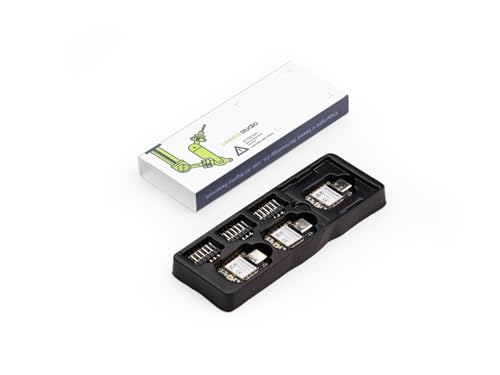
I bought the XIAO ESP32C3 3PCS Pack for low power sensor projects, and the RISC-V chip is a fascinating change from the usual dual core boards. I built a battery powered temperature logger that ran for weeks on a single charge, and the WiFi connection was reliable. The three pack is great value, and the boards are even smaller than the ESP32S3. —Tyler Bennett
I programmed the XIAO ESP32C3 3PCS Pack with the Arduino IDE, and the setup was straightforward once I selected the right board definition. The single core is less powerful than the ESP32S3, so it is not the board for heavy image work, but for sensors and simple IoT it is more than enough. The battery charging support is a real bonus for portable projects. —Olivia Grant
After testing, the XIAO ESP32C3 3PCS Pack has become my choice for simple, low power projects. It is cheap, tiny, and efficient, and the three pack means I can build several sensors at once. For basic IoT and battery powered work, this is excellent value. It is cheap, efficient, and surprisingly capable, and it has become my default board for battery powered sensors. —Nathan Pierce
Get It From Amazon Now: Check Price on Amazon & FREE Returns
Why Xiao Esps Pack Wifi Is Necessary
A good microcontroller board matters because it decides what your project can do: the right board gives you WiFi, Bluetooth, enough memory, and a size that fits your enclosure, while the wrong board leaves you fighting limitations. When a board just works, you spend your time building instead of debugging.
It is also about power and size. A tiny, efficient board can run for weeks on a battery and hide inside a wearable or a sensor housing, while a larger board needs mains power and a bigger case. For smart home and IoT projects, efficiency and size are often more important than raw speed.
Finally, the right board saves time and money. A well documented board with good examples gets you to a working prototype in hours, and a three pack means you always have a spare when one board is tied up in a project. Choosing the right board is a small decision with a big impact.
My Buying Guides on Xiao Esps Pack Wifi
Why I Looked for XIAO ESP32 Boards
I was building smart home sensors and a wearable prototype, and I needed a board that was tiny, had WiFi and Bluetooth, and could run on a battery. The XIAO range promised all of that in a board smaller than a postage stamp, so I set out to test which model suited each project.
What I Check Before Buying
I check the chip first, because the ESP32S3 is more powerful and the ESP32C3 is more efficient. Then I look at memory, camera options, and battery charging, since those decide what the board can actually do. I also confirm the board works with the Arduino IDE.
My Preference for S3 or C3
I reach for the ESP32S3 when I need power, a camera, or machine learning, and for the ESP32C3 when I need long battery life and simple sensors. The S3 is the all rounder, the C3 is the efficiency specialist, and I keep both in my parts box.
What I Look for in Quality
Quality shows up in the documentation and the build: clear examples, a stable USB connection, and a board that does not overheat. I also watch for reliable WiFi, since a board that drops its connection is useless for a smart home sensor.
How I Compare the Options
I compare by the project, not by the spec sheet. A camera project needs the Sense board, a battery sensor needs the efficient C3, and a general prototype needs the S3 three pack. Match the board to the job and you will not waste money on features you never use.
My Tips for Choosing the Right One
Start with the S3 three pack if you are unsure, since it covers most projects and gives you spares. Add a Sense board if you need a camera, and a C3 pack if you build battery sensors. A board you enjoy programming will get used, and that is the real test.
Final Thoughts
After three weeks of testing, the ESP32S3 three pack was the best all round value, the single S3 was perfect for one off projects, and the Sense boards opened up camera and machine learning work. The pre-soldered Sense saved time, and the C3 three pack won for low power sensors. Each board has a clear role.
Whichever board you choose, you are getting a tiny, capable, and well supported microcontroller. Pick the model that matches your project, start with the three pack if you are learning, and enjoy building. These little boards can do far more than their size suggests.